
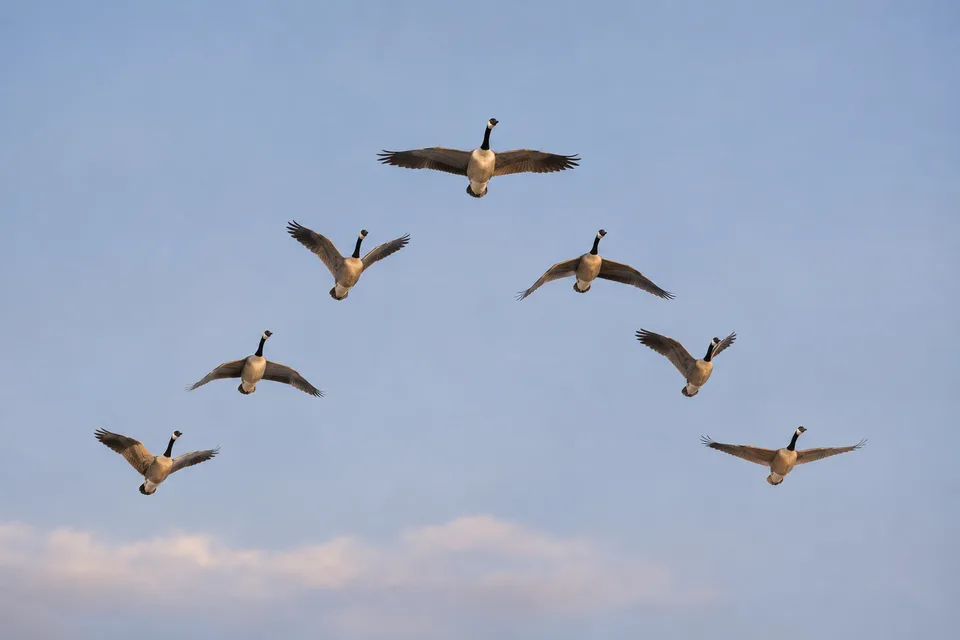
The helpful air is off to the side
Some birds fly in a V because a bird behind and slightly to one side can get a lift from air rising near the wingtip of the bird ahead. That rising air is called upwash. Using it can make flying in formation less tiring.
Picture two birds approaching a tree. If the second follows off to one side, it can pass through the rising air left by the first. Directly behind the leader, the air between the wings tends to move down. The diagonal arms of a V put more birds where the airflow can help them.
Watch where the wingtips go
Researchers tracked northern bald ibises in flight. The birds behind and to the side tended to trace a similar path with their wingtips to the bird ahead. A following bird reaches the same patch of air a little later, so its wingbeat can be timed to catch the rising air there.
How can we tell whether it saves energy?
A separate study measured heart rates in trained great white pelicans. The measurements suggested the pelicans used less energy in formation. The amount of help depends on where a bird flies within the group.
For another example of birds using their bodies efficiently, read why flamingos stand on one leg.