
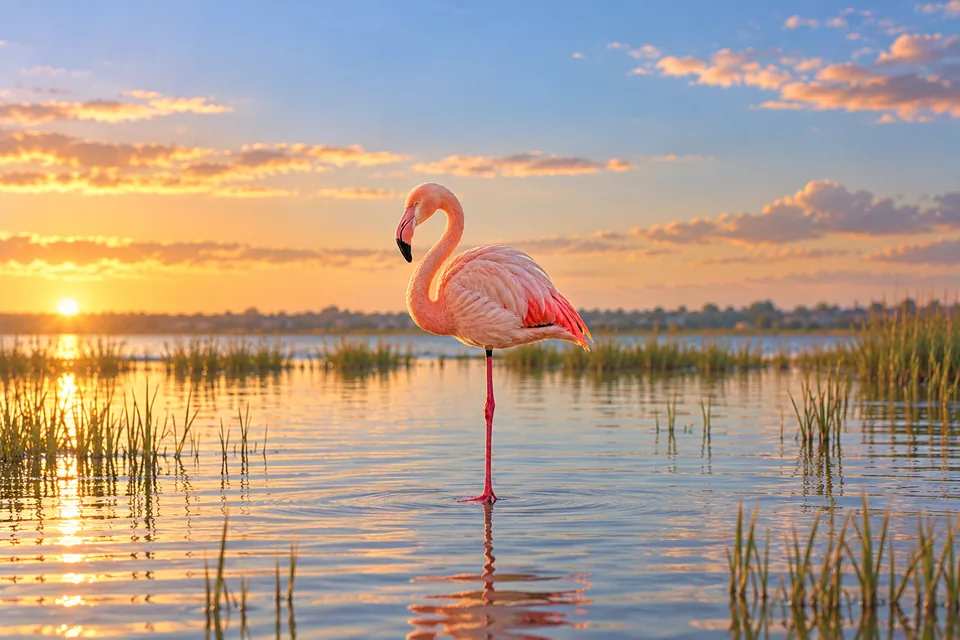
A rest that looks like a stunt
A one-legged stance can let a flamingo support its weight with very little active muscle effort. That helps explain how the pose works, without settling every reason birds choose it.
To us, the bird looks like it is attempting a very slow circus act. To the flamingo, that pose may be rather restful.
Built-in support, not a locked leg
Emory’s report on a 2017 study describes how the bird’s anatomy, posture and gravity can help support its weight.
The researchers compared it to support from a sling, rather than bones clicking into a lock. The useful trick depends on the bird’s particular position.
A good clue, not the whole mystery
Researchers have also considered whether the posture helps reduce heat loss. Showing how a bird can balance does not settle every reason it does so.
And if the pose is one puzzle, its colour is another: discover why flamingos are pink. That answer starts with dinner.