
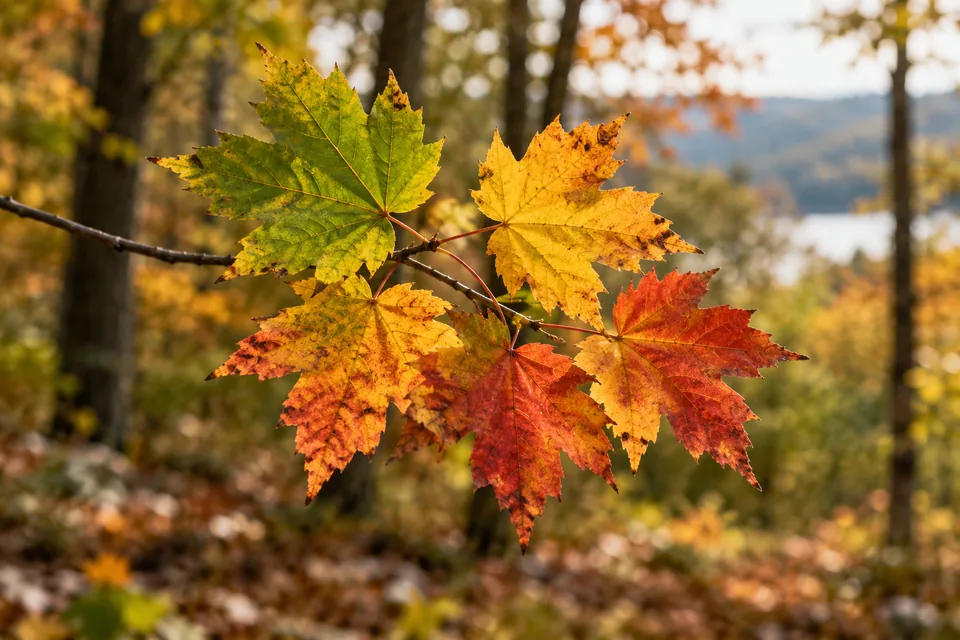
The green steps aside
Leaves change colour in autumn as green chlorophyll breaks down and other pigments become visible or are made. Shorter days help signal the change in trees that shed their leaves for winter.
The tree has not ordered a new coat of paint. The chemistry inside its leaves is changing.
Yellow was already there
Chlorophyll helps leaves capture sunlight for photosynthesis, which produces sugars. Through summer, the tree keeps replacing it.
Kew explains how that replacement slows in autumn. As the green fades, yellow and orange pigments that were already present become easier to see.
Red has another story
Not every autumn colour was hiding there all summer. Many species make red and purple pigments called anthocyanins in late summer and early autumn.
Iowa State University describes how sugars in the leaf help produce them. Yellow and orange are revealed; some reds are newly made.
Look at one branch
Species and weather affect the display. Even leaves on one tree can change at different stages, so a single branch may hold several colours.
For another pigment puzzle, discover why flamingos turn pink. Their colour story starts somewhere rather different: dinner.