
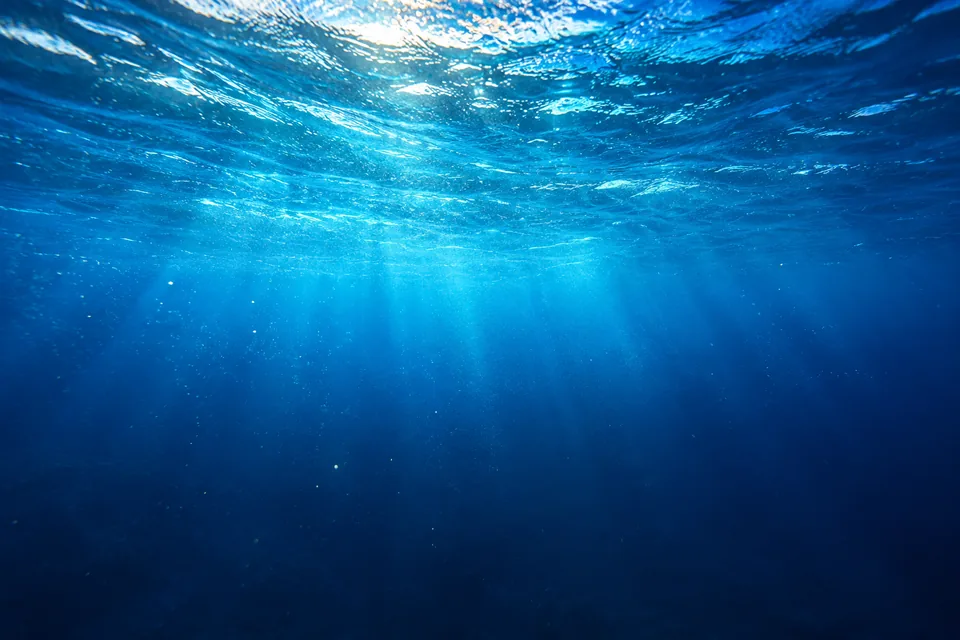
Water sorts the sunlight
The ocean often looks blue because water absorbs the red part of sunlight more readily, leaving more blue light to reach our eyes. NOAA describes the ocean as a sunlight filter.
Sunlight contains many colours. As it travels through water, those colours do not all survive the journey equally well. Blue light can travel farther through clear water than red light, and some is scattered back towards us.
Think of a mixed bag of coloured sweets with many of the red ones taken out. The remaining colours stand out. Water is changing which parts of the light remain, rather than adding blue dye.
What about the sky?
The surface can reflect the sky, so the weather and viewing angle can change what you see. But reflection is only part of the picture.
Woods Hole Oceanographic Institution points out that the blue remains below the surface, where a reflected sky cannot explain it. The water itself matters.
The blue of the sky has its own explanation: tiny molecules in the air scatter short wavelengths of sunlight especially strongly. Two familiar blues, with different stories behind them.
Why can the sea look green or turquoise?
The ocean contains more than water. Floating particles and microscopic algae can change which light is absorbed or scattered, giving the sea green, brown or even reddish shades.
In shallow, clear water, sunlight can reach a pale sandy seabed and bounce back. Woods Hole explains how this helps create turquoise coastal water. Depth, the seabed and what is suspended in the water all affect the view.
So the blue on a map is a useful symbol, but a coastline offers a much bigger colour chart. For another seaside puzzle, discover why the ocean is salty when rivers taste fresh.