
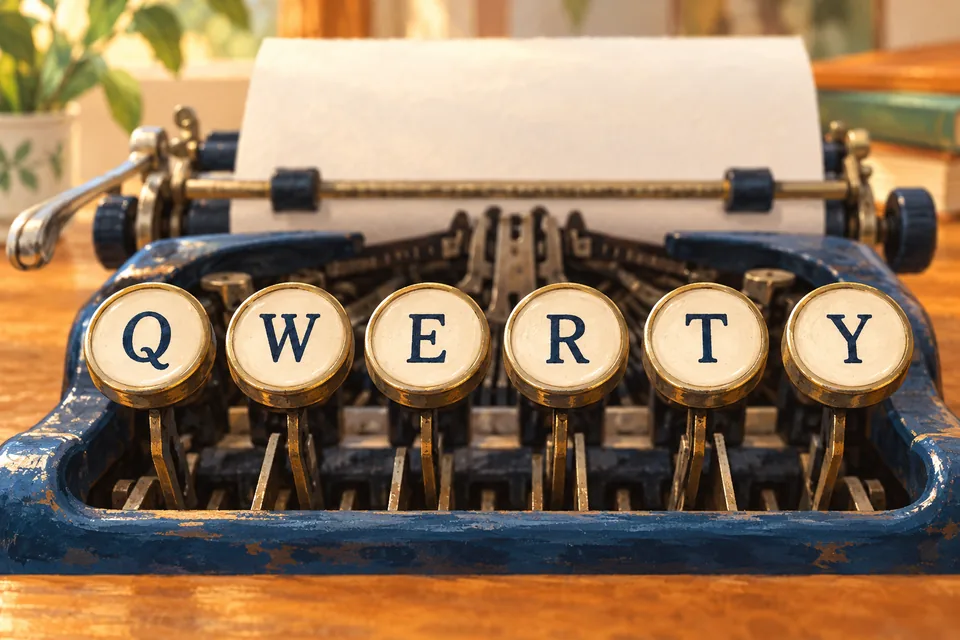
Your keyboard has a typewriter past
QWERTY is named after the first six letters on its top letter row. The layout came from 1870s typewriters and remained familiar as computers took over. The exact reason for its original arrangement is still disputed.
So that odd little word on your laptop is a souvenir from a machine that printed letters by hitting paper.
The 1878 paper trail
Inventor Christopher Latham Sholes left a useful clue: Figure 3 of his 1878 patent shows a keyboard whose top letter row begins QWERTY.
Pressing a key moved a metal type towards the paper, making an inked impression. The paper then shifted along by one character. It was typing with moving metal, not software.
Was it meant to slow typists down?
That familiar explanation is not a settled fact. In Washington State University’s interview with historian Erin Hvizdak, the story about preventing jams by slowing typists is questioned.
Another explanation connects the layout to telegraph operators transcribing Morse code. The evidence leaves room for debate; a tidy origin story is not always the whole story.
Old layout, new screen
As typewriters spread through offices and schools, people learnt QWERTY. As the WSU account explains, familiarity helped it survive the move from typewriters to computers.
Your fingers may know where a letter lives before you consciously look for it. Familiar objects can carry surprisingly long histories—just ask the tiny moving ball inside your pen.