
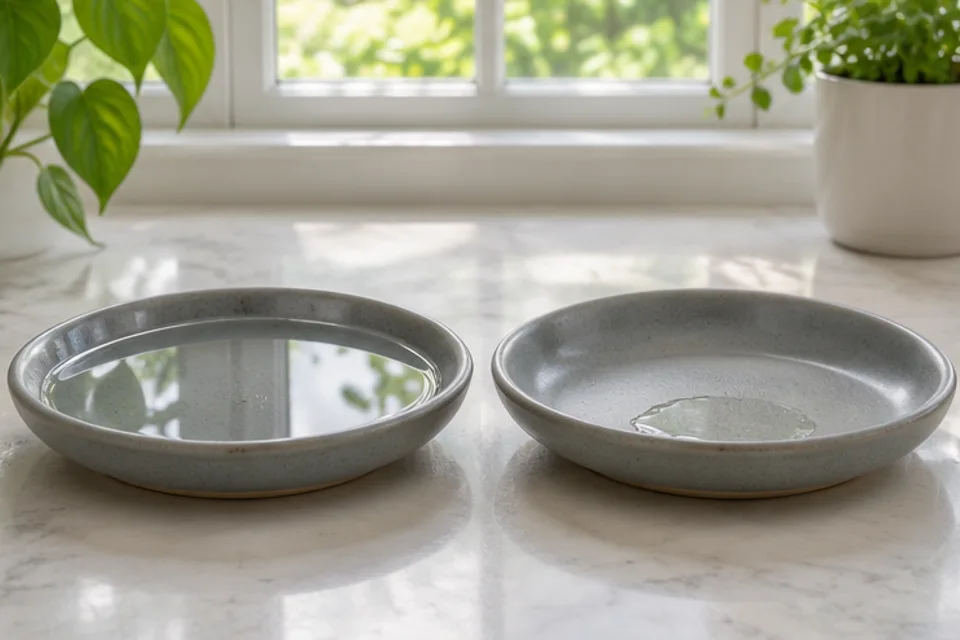
Set up the comparison
Imagine putting 20 millilitres of water in a shallow wide dish and 20 millilitres in a narrow cup. Put both on the same shelf, away from a heater and out of direct sunlight. The amount of water starts equal, even though the two surfaces have different sizes.
Measure the change
Compare the amount of water lost after the same length of time. For a simple classroom version, weigh each container before and afterwards and subtract its own final reading from its own first one. If the wide dish loses more water, it fits the exposed-area prediction.
Spot a mixed-up result
If the wide dish is in a sunny window and the cup is in a cool cupboard, heat and air movement can change too. Drying sooner would not tell you which difference mattered most. Bring both containers back to the same shelf before interpreting the comparison.
For the underlying idea, read where a puddle goes. Explore more routes in the water cycle hub.
Read the source: US Geological Survey · Evaporation and the water cycle.