
Change one thing
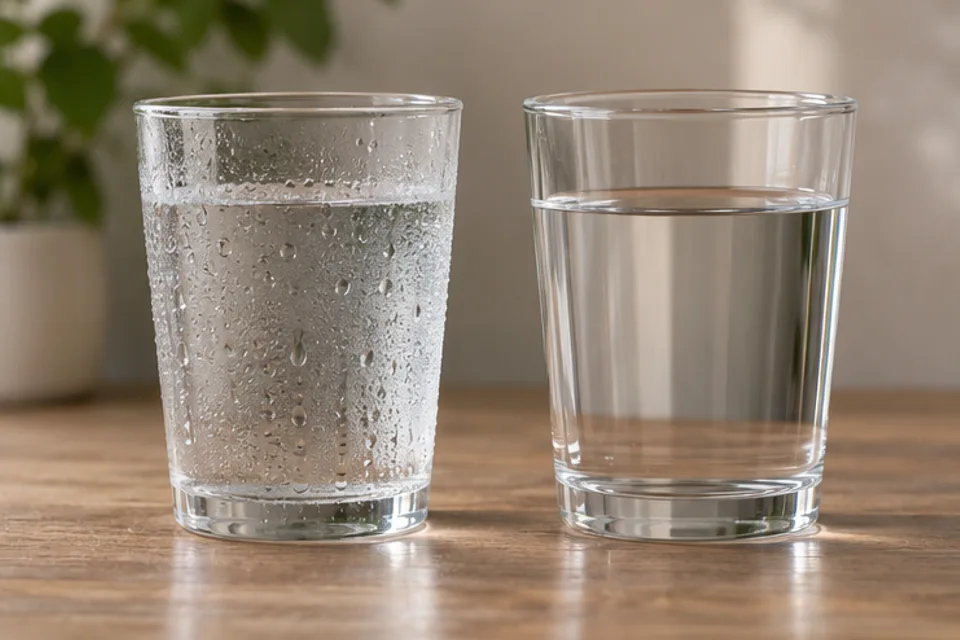
Imagine taking two identical empty glasses and drying both. Chill one first and leave the other at room temperature. Put them side by side on a dry tray at the same moment. That way both meet the same air. Draw a little circle where you expect the first droplets.
Read the result
If drops gather on the outside of the cold glass, your model says water vapour cooled at its surface and became liquid. The warm glass helps you rule out a shared cause such as a splash from the tray. On a very dry day the effect may be faint, since there is less vapour available.
Turn it into a prediction
Suppose you move the glasses to a room with more water vapour but keep their temperatures the same. The cold glass is now more likely to cool the nearby air enough for droplets to form. Keep your prediction about the outside of the glasses. Neither glass contains any liquid to spill.
For the underlying idea, read how condensation coats a cold glass. Explore more routes in the water cycle hub.
Read the source: US Geological Survey · Condensation and the water cycle.