
Two paths on the map
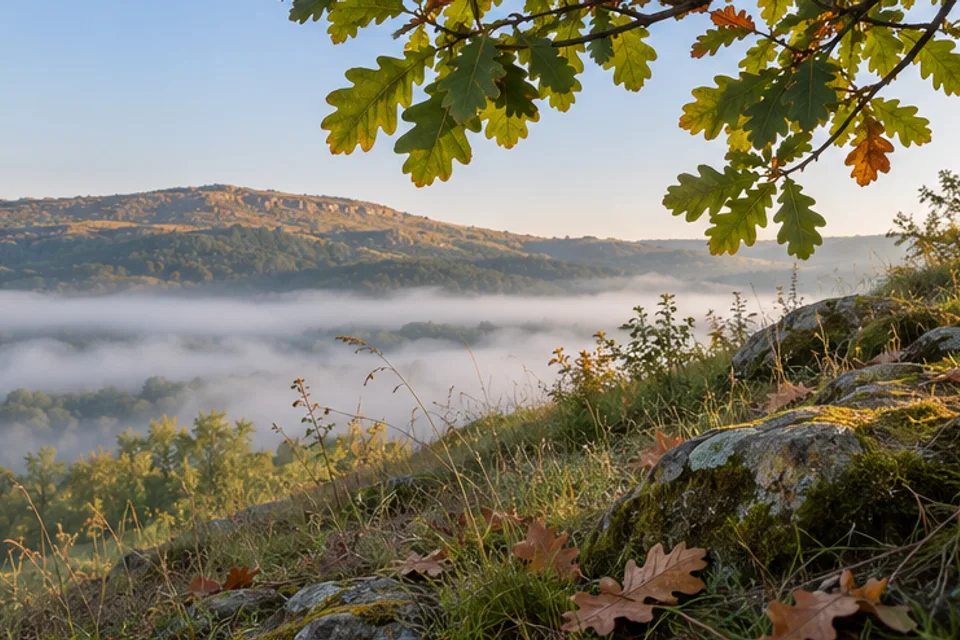
Imagine a hillside village with a road along its river and another near the top of the slope. Overnight the sky stays clear, the wind is light and the air near the river is moist. At dawn, a shallow layer of fog has formed in the valley. Circle the road that runs through the layer.
Find what changed
You travel uphill on the higher road and can see the other side of the valley above the fog. The extra visibility makes sense if the road has risen above most of the suspended droplets. Light and wind may change the fog later in the day. The story gives conditions for this example, rather than a rule that every valley must be foggy.
Try a second forecast
Now swap the valley for a stretch of coastline. Moist air blows across colder water. It can cool near the surface and form fog even though there is no valley to collect cold air. In both sketches, look for the place where moist air cools.
For the underlying idea, read why a valley fills with fog. Explore more routes in the water cycle hub.
Read the source: Met Office · What is fog?.