
Why the view disappears
Fog forms when tiny water droplets, or sometimes ice crystals, hang in the air near the ground. The droplets commonly appear when moist air cools enough for water vapour to condense. Their scattering makes distant objects harder to see. They are the same kind of tiny drops you find in a cloud.
Look down into a valley
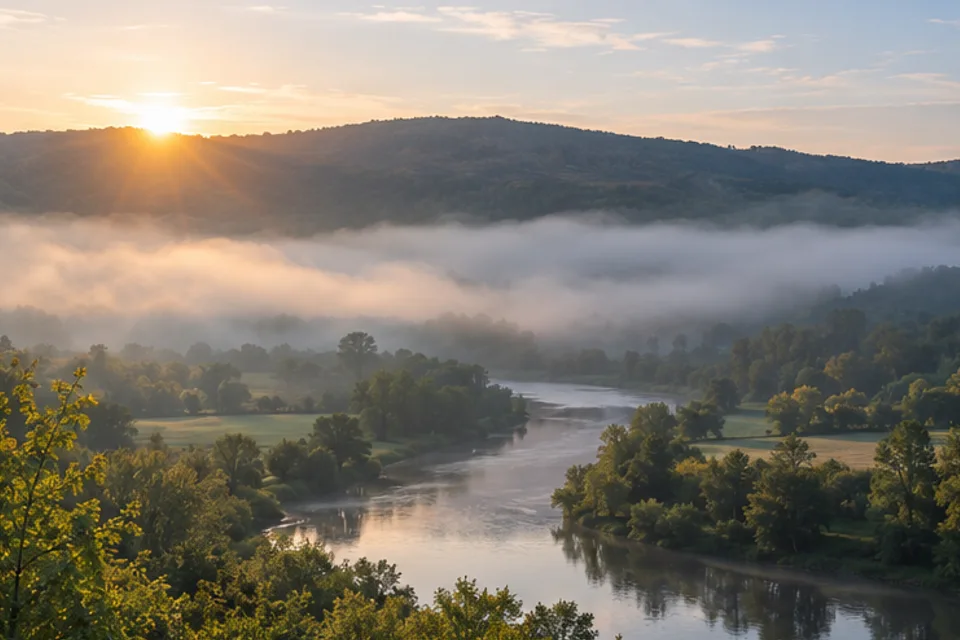
On some clear, calm nights the ground loses heat and cools the air just above it. Cold air can collect in a valley, so by sunrise the valley bottom may be foggy while higher ground has a clear view. The top of the fog can look like the top of a cloud because it is a low cloud viewed from above.
It can happen on the coast too
The same visible result can start in another way. Moist air that travels across colder water can cool from below and produce sea fog. Compare that with how condensation coats a cold glass on a glass: the glass collects droplets on a solid surface, while fog droplets stay suspended in the air.
Try the companion Academy exercise, or find your way through the water cycle from cloud to coast.
Read the source: Met Office · What is fog?.
To explore the droplets on a surface, predict what happens to two empty glasses at different temperatures.