
The water comes from the air
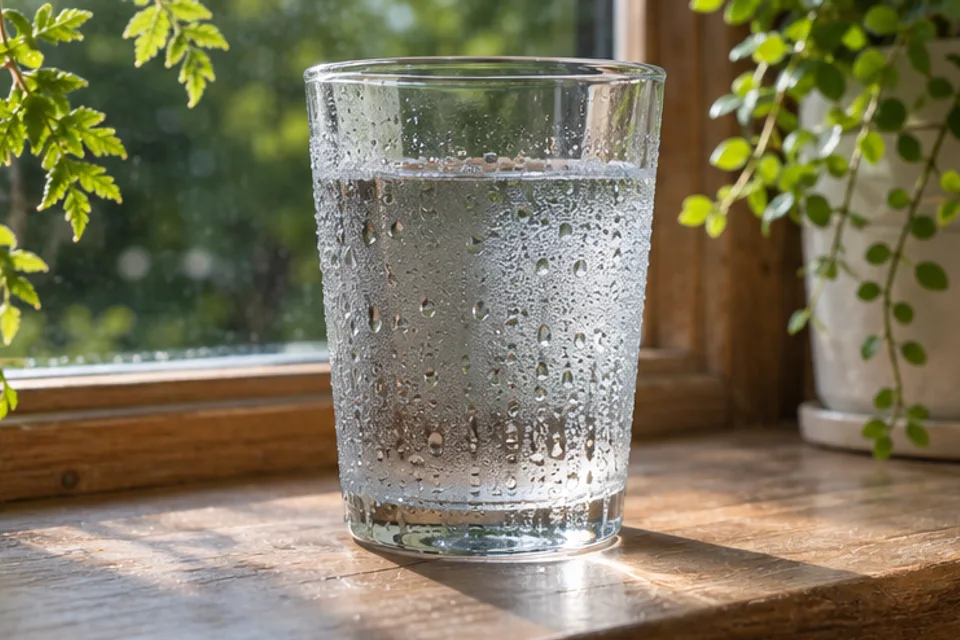
A cold glass gets wet because water vapour in the air cools beside it and becomes liquid. The glass needn’t contain a drink at all. An empty glass chilled in a fridge can collect tiny drops when it comes into a warmer, damp room. The glass is cooling the air next to it.
Why the other glass stays dry
Picture two identical glasses, both starting dry. One is chilled and the other has been on the table all morning. A few minutes later, the cold one may have specks of water while its neighbour stays dry. Both are surrounded by air with water vapour in it. Only the chilled glass cools the air against it far enough for droplets to form.
Follow it to a window
On a cold morning, room air can leave drops on the inside of a cool window. A lake, a breath and a kitchen can all put water vapour into the air. When the vapour becomes liquid, the process is called condensation. The glass lets you watch the change on a surface; why a valley fills with fog shows what it looks like when droplets hang in the air.
Try the companion Academy exercise, or find your way through the water cycle from cloud to coast.
Read the source: US Geological Survey · Condensation and the water cycle.