
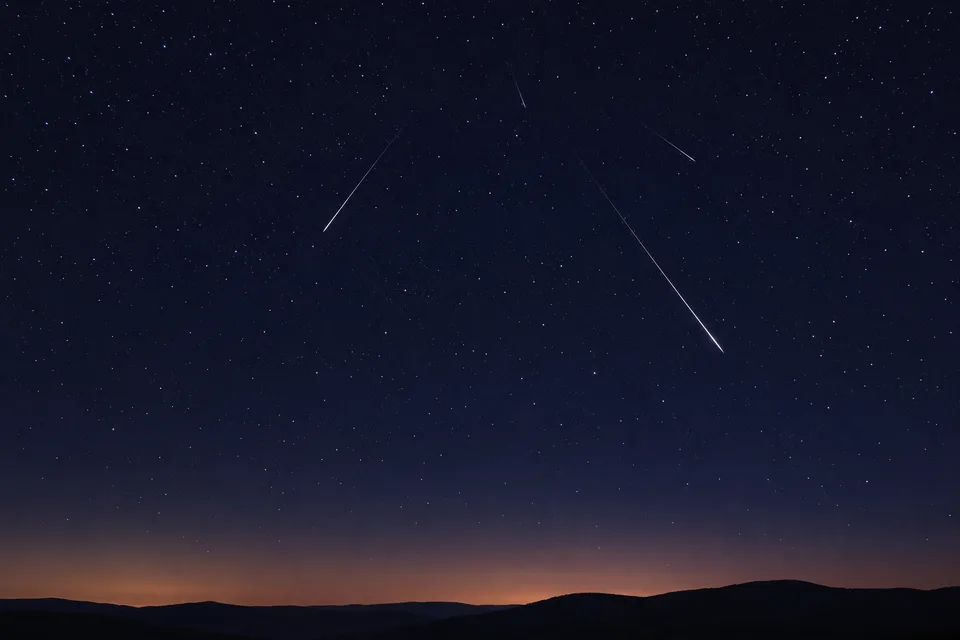
When are the Geminids in 2026?
The Geminid meteor shower is active from 4 to 20 December 2026, with the strongest activity expected around 13–14 December. NASA highlights that night as a good time to look, and the International Meteor Organization predicts a maximum around 14:00 UTC on 14 December.
The forecast gives the peak in UTC. Where you live, that moment may fall in daylight. At UTC+11, for example, 14:00 UTC on the 14th is 01:00 on the 15th locally. Pick a clear, dark stretch of night close to the peak. The Moon is a waxing crescent this year, so it should be less of a problem than a full Moon.
Where should you look?
Find a dark place with an open view of the sky, away from streetlights. Let your eyes adjust for about half an hour and look over a broad patch of sky with the naked eye. Binoculars narrow the view and make it easier to miss a streak elsewhere.
Geminid trails appear to fan out from a point in Gemini, called the radiant. They can still appear across the sky. After midnight is a useful starting point for many places, but local cloud, light pollution and the height of the radiant all affect what you see. Published peak rates assume ideal observing conditions.
If the shower night is cloudy, use the beginner’s stargazing guide to plan a different target for your next clear evening.
Why are the Geminids unusual?
The Geminids are linked to the rocky asteroid 3200 Phaethon. Earth crosses the stream of debris associated with it each December. Small particles make brief streaks of light as they enter our atmosphere.
Compare that with the Orionid meteor shower, which is linked to Halley’s Comet. The two showers make similar streaks even though their parent objects are different.