
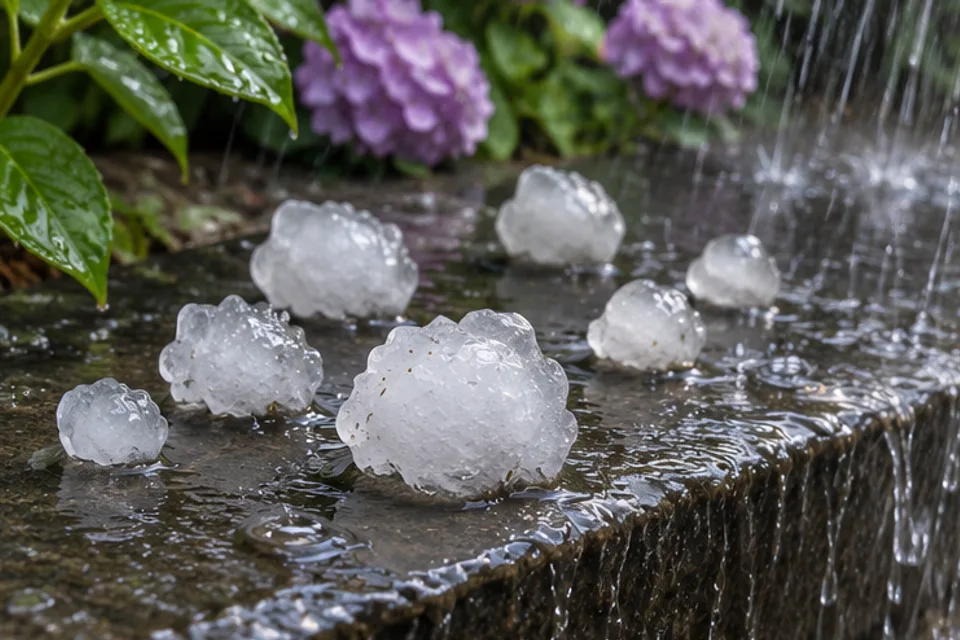
What makes a hailstone
Hail forms inside thunderstorms when an updraught carries a small piece of ice through a cloud containing very cold liquid droplets. The droplets can freeze onto the ice and make it grow. The trick is that water drops can still be liquid below their usual freezing temperature. Meteorologists call those drops supercooled.
Why it can hail in summer
The air at your feet can feel warm even while part of the cloud above is cold enough for ice growth. A stronger updraught can support larger stones, given suitable conditions for growth. When a hailstone becomes too heavy for that rising air, or is carried out of it, the stone begins its descent. It can melt partly on the way down.
What the layers can tell you
Some stones have clear and cloudy layers. The appearance depends on how the droplets froze and whether air was trapped in the ice. Think of them as clues about growth conditions. A ring is not a reliable tally of how many trips a stone took. why a valley fills with fog also starts with tiny drops, but drops in fog can stay liquid and hang close to the ground.
Try the companion Academy exercise, or find your way through the water cycle from cloud to coast.
Read the source: NOAA National Severe Storms Laboratory · Hail basics.