
BrainiLab Academy · Science & nature
From the Moon to the time on your clock
Explore day and night, Moon phases, seasons, time zones and eclipses, then discover why the Moon keeps its familiar face towards Earth.
Start learning →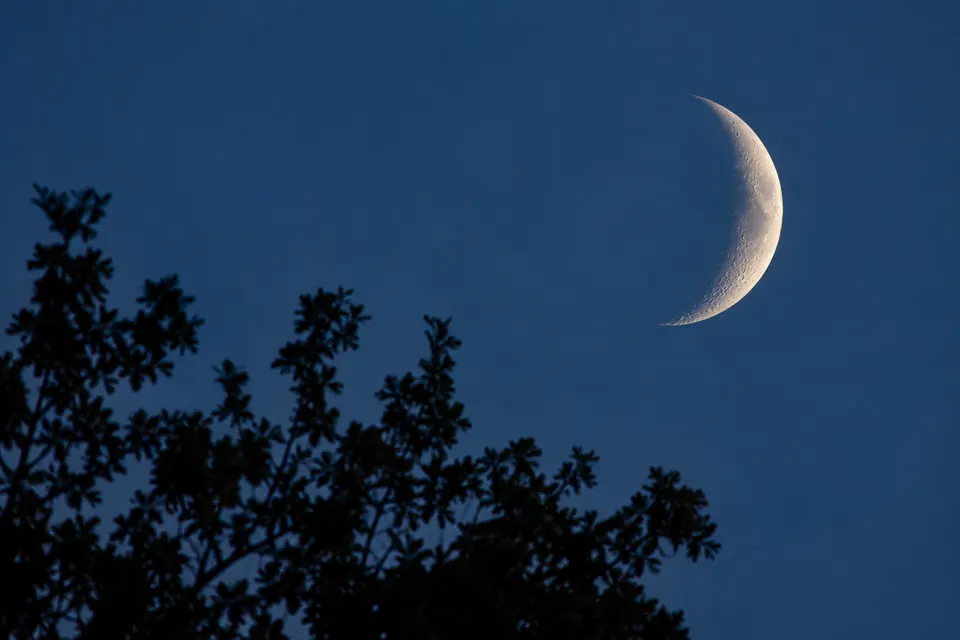
What you’ll explore
A ball beside a lamp, the changing evening light and a call to a faraway friend help us make sense of the sky and our clocks.
Follow the light through phases and eclipses, then picture a walk around a chair to understand the Moon’s hidden turn. Read at your own pace; the quizzes are optional.
One discovery at a time
Your lessons, step by step
- 1
 Read →
2 min read · Quick quiz
Why do we have day and night?
Turn a model Earth and follow a place from light into darkness.
Ready when you are - 2Read →
2 min read · Quick quiz
Why does the Moon seem to change shape?
Picture a ball beside a lamp to understand the Moon’s changing face.
Ready when you are - 3
 Read →
2 min read · Quick quiz
Why is summer warmer than winter?
See how Earth’s little lean changes the sunlight we get.
Ready when you are - 4
 Read →
3 min read · Quick quiz
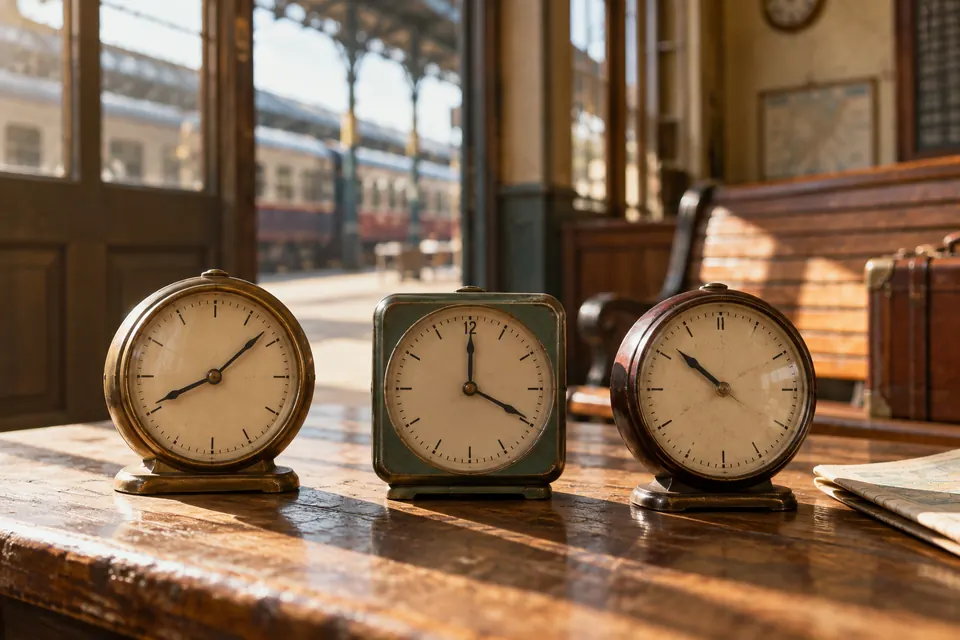
Why isn’t it the same time everywhere?
Follow three clocks to understand why places use different times.
Ready when you are - 5
 Read →
2 min read · Quick quiz
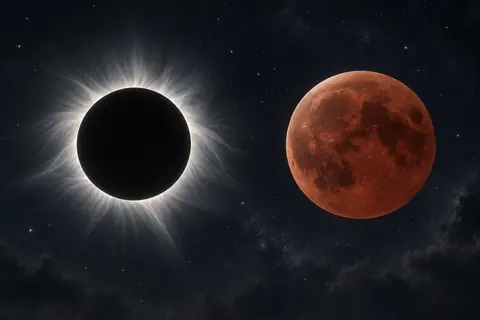
Solar eclipse vs lunar eclipse: who is in the middle?
Distinguish solar and lunar eclipses by alignment, shadow and Moon phase.
Ready when you are - 6
 Read →
2 min read · Quick quiz
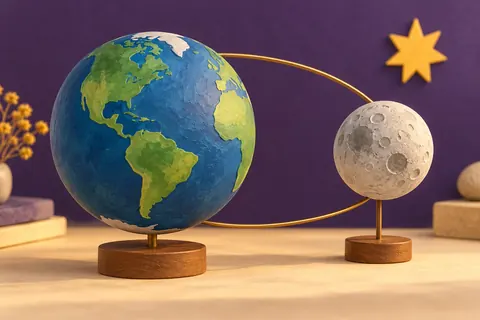
Why do we always see the same side of the Moon?
Explain synchronous rotation, distinguish the far side from darkness and recognise the small change in viewpoint called libration.
Ready when you are
A few words worth knowing
- Phase
- One of the different views we get of the Moon’s bright side.
- Hemisphere
- One half of Earth.
- Time zone
- An area that follows the same rules for its clocks.
- Eclipse
- An alignment where one object blocks sunlight from reaching another object or from reaching our view.
- Synchronous rotation
- One turn on an object’s axis in the same time as one orbit around its partner.
- Libration
- Small apparent rocking of the Moon that changes our view around its edges.
Curious to dig deeper?
- NASA Science — Moon phases
- NASA Space Place — What causes the seasons?
- IANA — Time-zone database and civil-time changes
- Royal Museums Greenwich — Local time and the railways
- NASA Science — Eclipses and the Moon
- NASA Science — Why Do Eclipses Happen?
- NASA Science — Eclipse Viewing Safety
- NASA Science — Moon Facts: Orbit and Rotation
Follow the sources, explore a little further, or tell us if something needs a correction. Suggest a correction.