
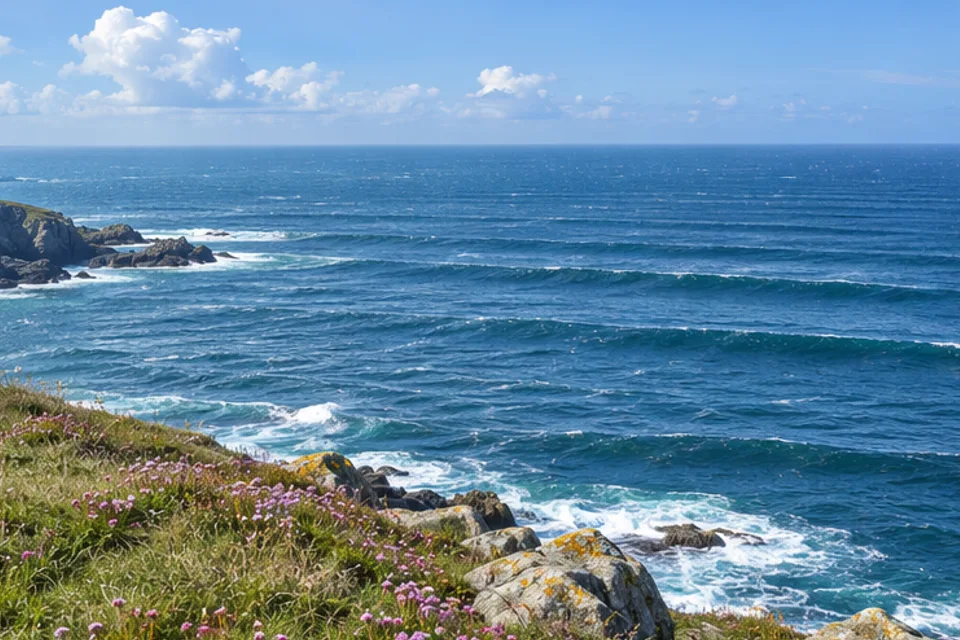
From a breeze to a crest
Most ordinary ocean waves begin when wind transfers energy to the surface. Small ripples can grow as the wind continues to disturb the water. A train of waves can travel beyond the place where the wind produced it. That travelling swell can reach a beach on a calm day.
Watch one bit of water
Imagine watching a floating marker far enough from shore that the waves are not breaking. It can rise, dip and move a little back and forth as crests pass it. The crest travels onward even though the marker generally stays in the area. The wave passes energy along while any current can separately carry the marker away.
Read the water near land
As a wave enters shallower water the shape can change and a crest can topple. Breaking waves may push water up the beach. This short repeated motion sits on top of more gradual changes in water level, such as what drives the tides. Wind explains many everyday waves; a tsunami starts with a different kind of disturbance.
Try the companion Academy exercise, or find your way through the water cycle from cloud to coast.
Read the source: NOAA Ocean Service · Why does the ocean have waves?.