
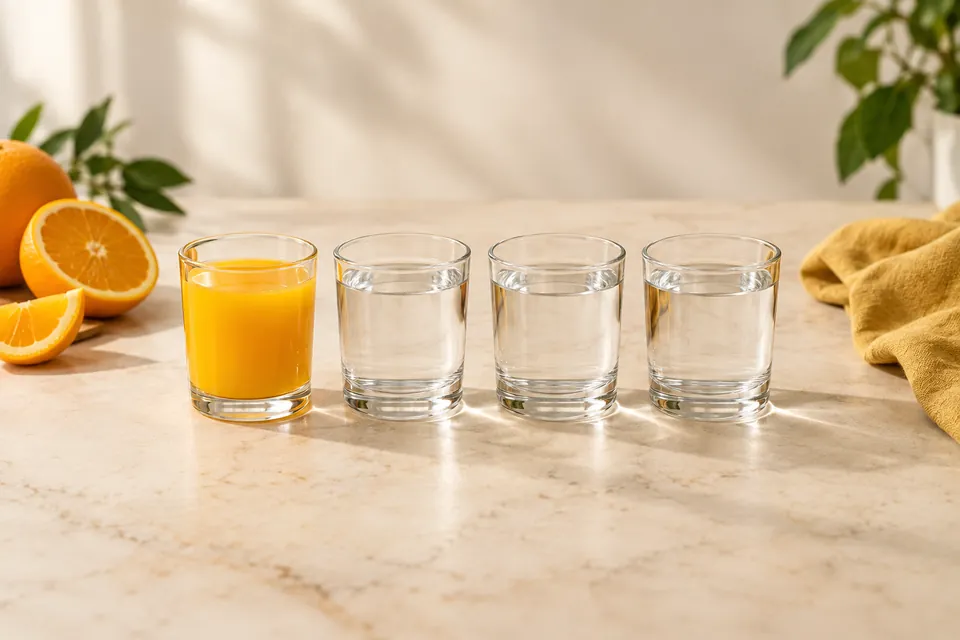
A picnic drink with two numbers
A ratio compares two quantities in a stated order. If you mix one cup of juice with three cups of water, the juice-to-water ratio is 1:3. Read it as “one to three”. OpenStax explains this notation.
Imagine a picnic where you are in charge of the drinks. Use the same cup for both ingredients. One tiny juice measure beside three enormous water mugs would make a very different drink—and some disappointed guests.
Why one to three makes four parts
There are four equal measures altogether: one juice plus three water. Juice makes up 1/4 of the total measured amount, or 25%. It does not make up 1/3 of the whole.
The difference is what you compare. 1:3 compares juice with water; 1/4 compares juice with the whole. NRICH explores this distinction through drink mixtures. The numbers become clearer when you name both sides.
More guests, same mixture
For a larger batch, use two cups of juice and six cups of water. The ratio 2:6 has the same proportions as 1:3: you doubled both quantities.
Now juice accounts for 2/8 of the measured total, still 1/4. That is the idea behind equivalent fractions. Doubling only the water would change the mixture. Your jug may be fuller, but you have not preserved the recipe.
Which ingredient comes first?
Order matters. For this mixture, water to juice is 3:1, the reverse of juice to water.
Here is one final ratio example. For 600 mL of ingredients measured before mixing, split the total into four equal shares: 600 ÷ 4 = 150 mL. Use 150 mL of juice and 450 mL of water.
Before calculating, ask two small questions: “What am I comparing?” and “Are the measures the same size?” They save a surprising amount of confusion—and watery picnic drinks.