
BrainiLab Academy · Numbers & logic
Mental math for beginners: make numbers feel easier
Seven short mental math lessons: make friendly numbers, round, double, divide and build percentages, then discover why equal percentage changes do not cancel. Optional quizzes included.
Start learning →
What you’ll explore
Make ten, adjust a rounded number, double and halve, then try a few useful multiplication and division shortcuts. Build percentages from smaller shares before exploring a backpack price that drops and rises by the same percentage.
Each short lesson adds one idea. Read at your own pace and check the everyday examples; the quiz is optional.
One discovery at a time
Your lessons, step by step
- 1
 Read →
2 min read · Quick quiz
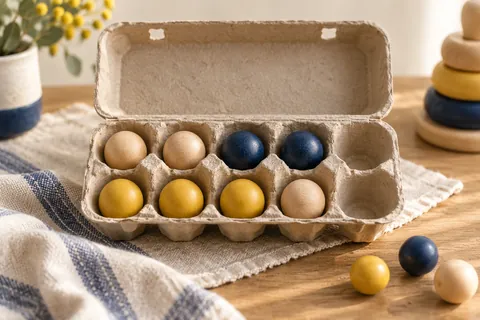
Make ten before you add the rest
Split an addition so the first step reaches ten.
Ready when you are - 2
 Read →
3 min read · Quick quiz
An easier way to add numbers in your head
Move a few counters and see why an awkward sum gets easier.
Ready when you are - 3
 Read →
2 min read · Quick quiz
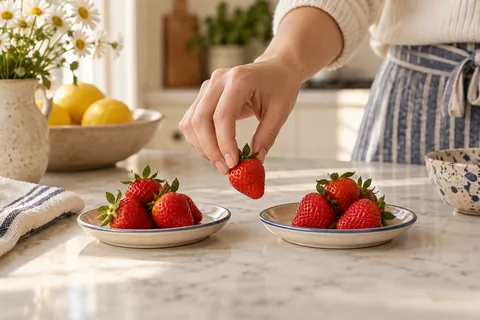
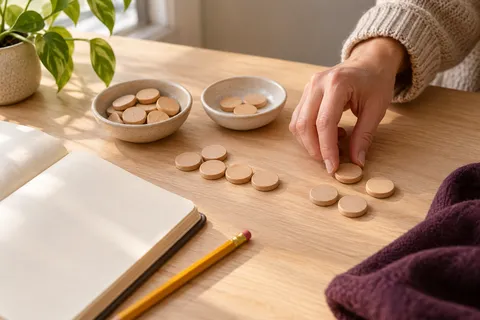
Double one number, halve the other
Double one factor and halve the other without changing the product.
Ready when you are - 4
 Read →
3 min read · Quick quiz
How to divide by 5 in your head: double first
Double first, divide by ten, and check the result—even with decimals.
Ready when you are - 5
 Read →
3 min read · Quick quiz
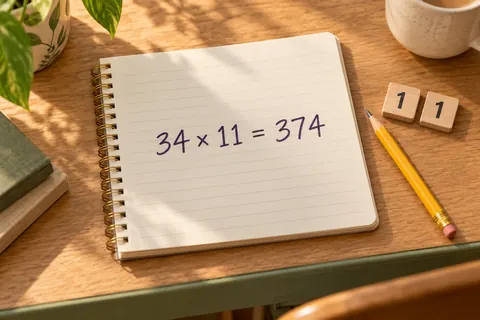
Multiply by 11: ten groups, then one more
Count ten bags of sweets, then add the last bag.
Ready when you are - 6
 Read →
3 min read · Quick quiz
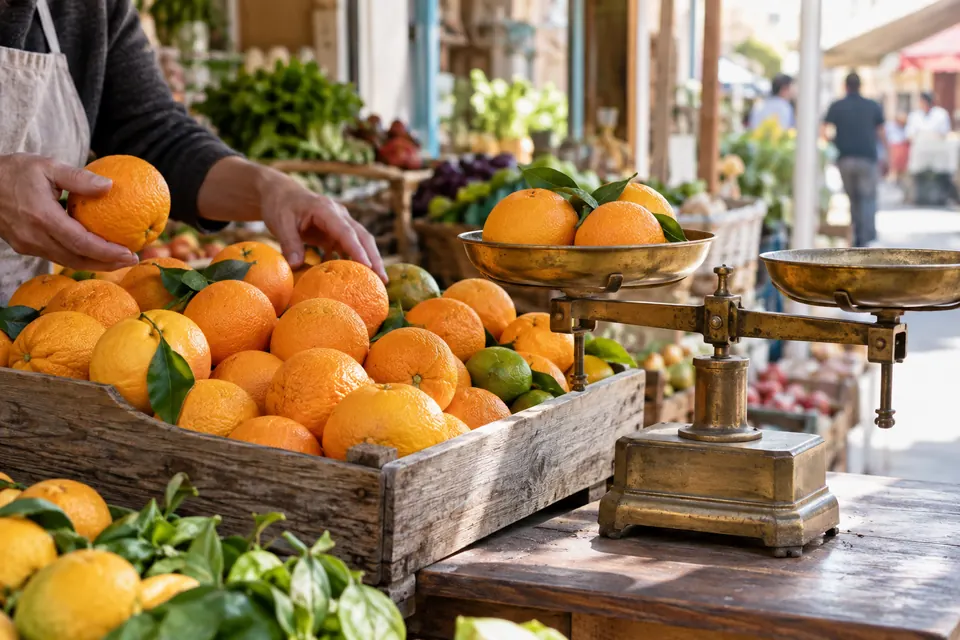
What does a percentage mean?
See what half, a quarter and ten percent look like.
Ready when you are - 7
 Read →
2 min read · Quick quiz
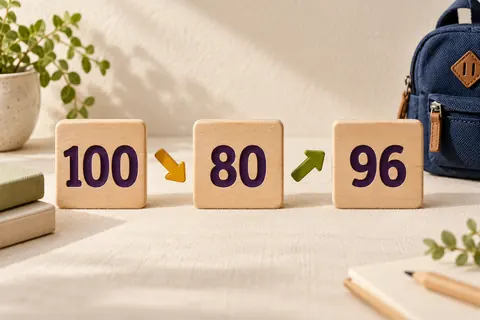
Percentage change: the 20% trap
Calculate a percentage change using the correct starting amount and explain why equal percentage decreases and increases do not cancel.
Ready when you are
A few words worth knowing
- Sum
- The total when you add amounts together.
- Multiply
- Count equal groups of something.
- Percent
- A share described as an amount out of every hundred.
- Percentage change
- The difference between new and original amounts expressed as a percentage of a positive original amount.
Curious to dig deeper?
- OpenStax — Commutative and Associative Properties
- OpenStax — Distributive Property
- OpenStax — Prealgebra: percent concepts
- OpenStax — Divide Whole Numbers
- OpenStax — Visualize Fractions
- OpenStax — Decimal Operations
- OpenStax — Prealgebra 2e: General Applications of Percent
- University of Cambridge NRICH — Dating Made Easier
Follow the sources, explore a little further, or tell us if something needs a correction. Suggest a correction.