
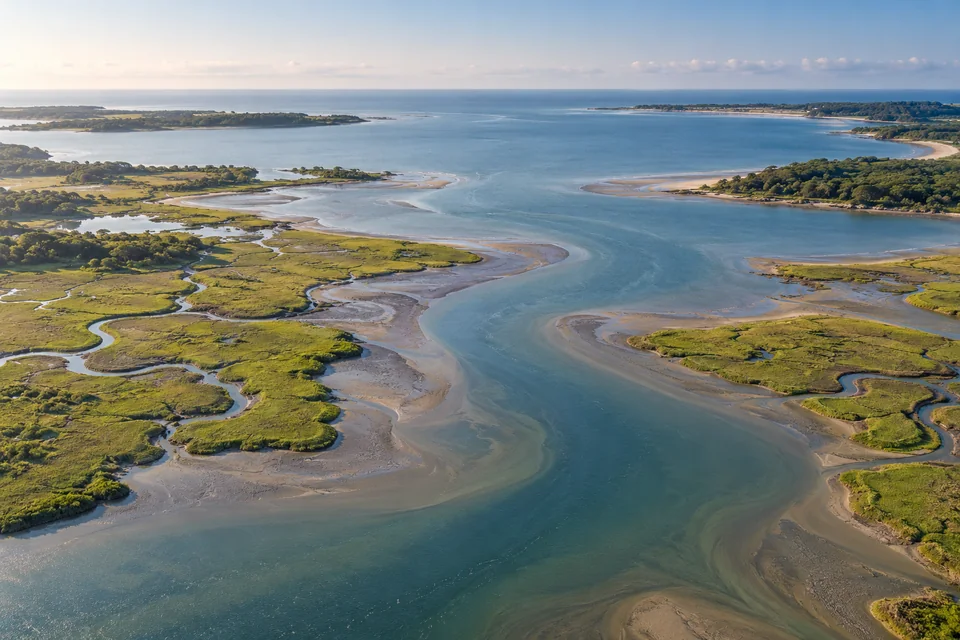
A meeting place with moving edges
An estuary is usually a coastal body of water where freshwater from rivers meets and mixes with seawater. Its surrounding wetlands are part of the story too.
A river brings water from the land. The sea brings salt and tides. Where they meet, the landscape can become a shifting mixture of channels, mudflats and marshes. Geography has arranged a rather busy meeting.
What does brackish mean?
NOAA describes the mixture as brackish water: partly salty, rather than fully fresh or as salty as the open sea.
It is not a permanent recipe. River flow and incoming tides can change the balance. You should not expect a neat line with freshwater on one side and seawater on the other. The meeting is a mixing process.
Why so much wildlife?
NOAA Fisheries calls estuaries nurseries of the sea. Many animals reproduce or spend their early lives there, finding food and shelter in habitats such as marshes and seagrass beds.
Rising and falling tides change water depth and conditions. For an estuary’s residents, adapting to change is part of living in the neighbourhood.
The freshwater plot twist
Not every estuary contains seawater. Freshwater estuaries occur around the Great Lakes, where chemically different river and lake waters meet. Old Woman Creek on Lake Erie is one example.
Follow the water a little further: discover where the ocean gets its salt, or see how a river bend can move. Water is a remarkably restless mapmaker.