
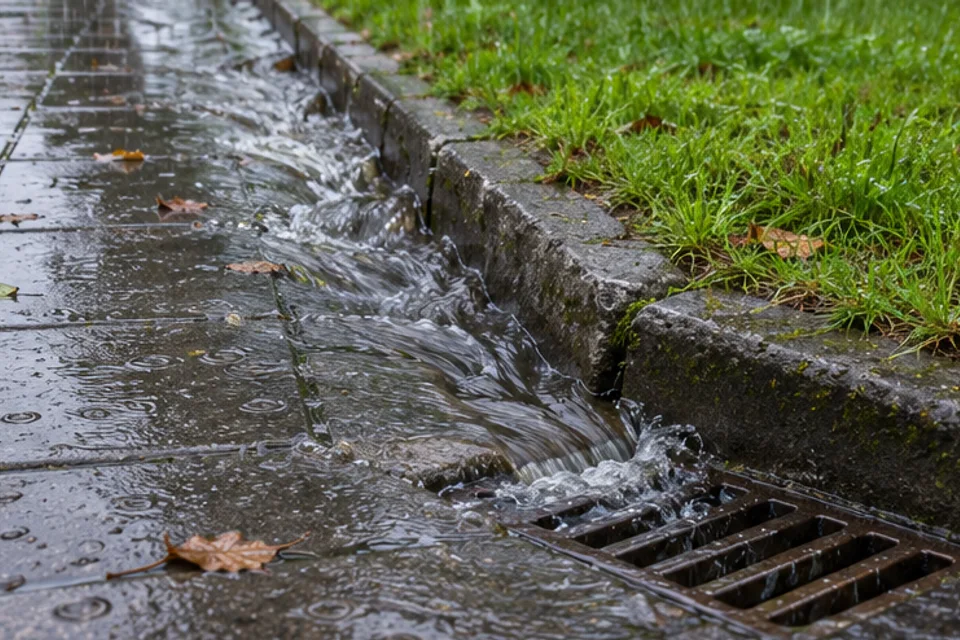
Rain that moves over the surface
Surface runoff is water flowing across the ground. Rain or melting snow can start it when water reaches the ground more quickly than it can soak in, or when the soil has little room left for it. Gravity guides that water downhill. It may meet a stream, a low patch or a drain.
Same rain, different ground
Picture a shower falling on a pavement and the grass beside it. Much of the water on the paved strip can quickly join a thin stream near the kerb. The soil on the verge may absorb more. If the grass has stood in heavy rain all morning, though, it can produce runoff as the soil becomes very wet.
What the water picks up
Runoff can carry grit and loose soil. When it reaches a river, that sediment may help explain why a river turns brown after rain. Rain that goes into the soil can follow a slower route underground; what a shallow well tells you describes a useful way to think about where that water goes.
Try the companion Academy exercise, or find your way through the water cycle from cloud to coast.
Read the source: US Geological Survey · Surface and overland runoff.