
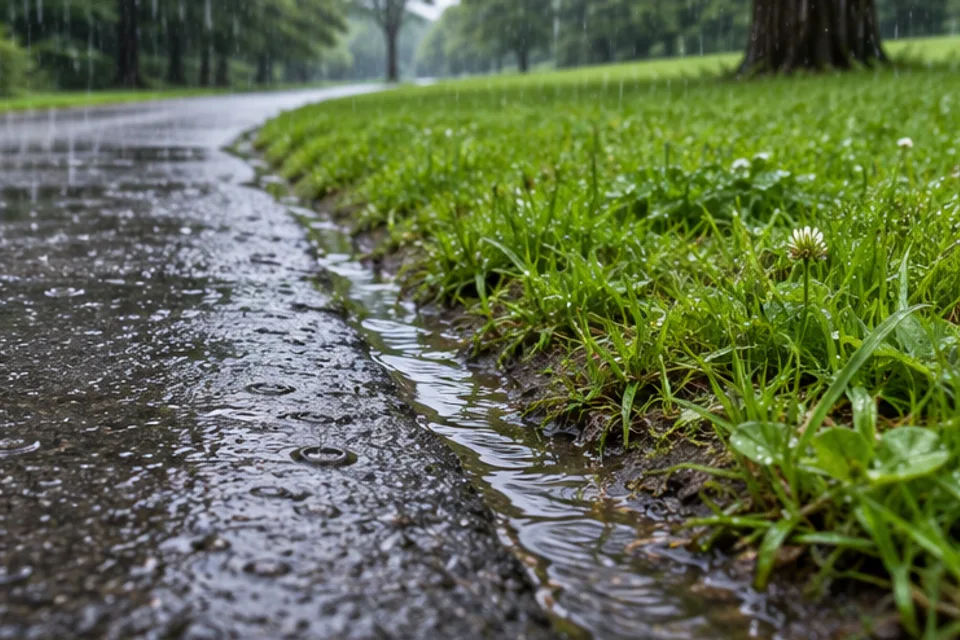
Give the surfaces the same shower
Imagine two trays tilted at the same angle. One has paving with no cracks; one contains loose, dry soil. Pour the same amount of water over each at the same rate. Draw a pencil arrow towards the bottom of both trays. Which tray is likely to send water there sooner?
Make room in the soil part of the model
The paved tray has little room for its water to enter. The loose soil may take some in instead. In a real street the fastest route may still be interrupted by a puddle or a drain. Our model focuses on the difference between moving over the surface and entering it.
Repeat the rain on wet soil
Now repeat the exercise after the soil has become very wet. More water can reach the tray’s lower edge than in the first soil run. A fair comparison of paving and grass must take earlier rain into account.
For the underlying idea, read how surface runoff reaches a river. Explore more routes in the water cycle hub.
Read the source: US Geological Survey · Surface and overland runoff.