
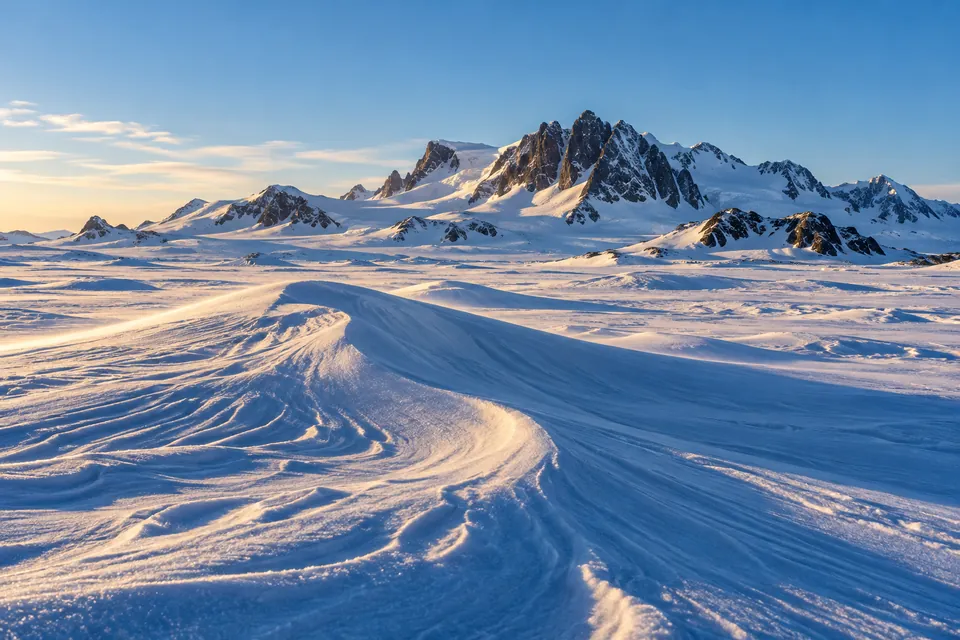
Put the camel back for a moment
Antarctica is the world’s largest desert. A desert is defined by dryness, not by heat or a covering of sand. The Natural History Museum identifies Antarctica as the largest because it receives so little precipitation.
If your mental picture came with dunes and a blazing sun, it needs a second version: a cold desert.
Snow still counts as precipitation
Precipitation is water falling from the atmosphere, including rain and snow. “It never rains” alone does not explain whether a snowy place is dry.
The British Antarctic Survey describes a striking contrast: several metres of snow can fall annually near the coast, while the interior gets only a few centimetres. Conditions vary across the continent; it is not equally dry everywhere.
The ice is a store, not today’s delivery
Antarctica’s ice does not show how much snow fell this year. As the Natural History Museum explains, snow has accumulated over immense periods, with pressure turning older layers into ice.
Think of a savings jar: a large amount inside does not mean a large amount went in today. That is the difference between a store of ice and a year’s snowfall.
One extra word changes the answer
Ask for the largest hot desert and the answer becomes the Sahara. NASA makes that distinction explicitly.
So keep the wording: largest desert, Antarctica; largest hot desert, Sahara. “Desert” is doing less work than our picture of it suggests.
For another place that can fool your mental picture, find out why Greenland looks so large on some maps.