
An awkward landing
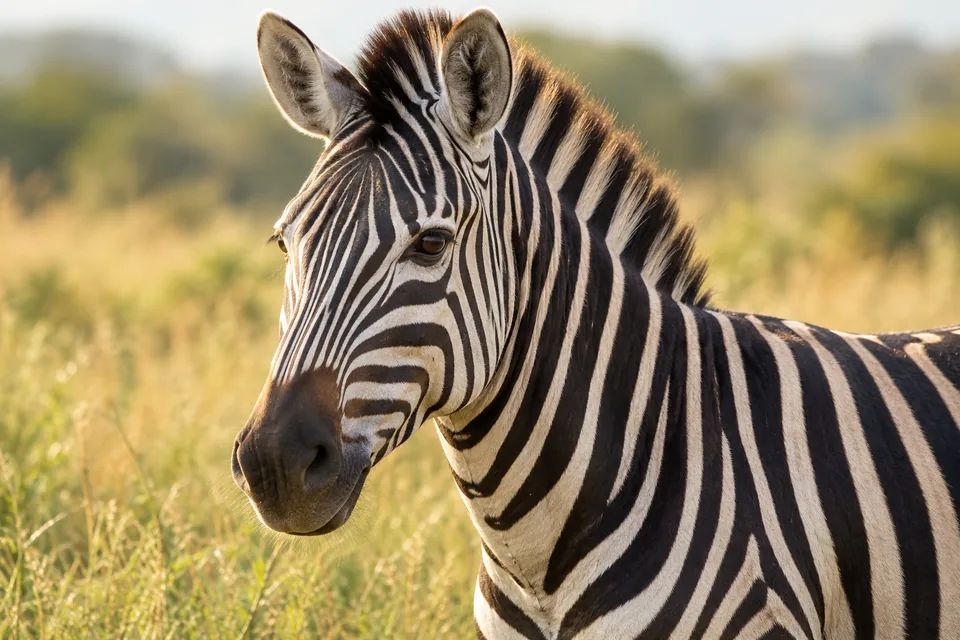
One well-supported explanation for zebra stripes is that they discourage biting flies from landing. Experiments show that horseflies touch down less often on strongly contrasting striped surfaces.
That striking outfit may have a very small audience in mind.
Horses in fancy coats
Scientists tested the idea by dressing domestic horses in different patterned coats and filming incoming horseflies. In a 2023 study by Tim Caro and colleagues, high-contrast stripes received fewer landings than faint ones.
Large dark patches were more attractive to the flies than smaller ones. The results point towards the importance of sharp contrast and the size of the pattern.
A clue, not the last word
The experiments found little support for some proposed optical-illusion explanations. The Bristol researchers still had questions, including why striping evolved in zebras rather than other hoofed animals.
The fly result is a useful clue, rather than proof that every part of zebra evolution is settled. For another animal whose colours have a practical explanation, discover why flamingos are pink.