
A small pile is enough
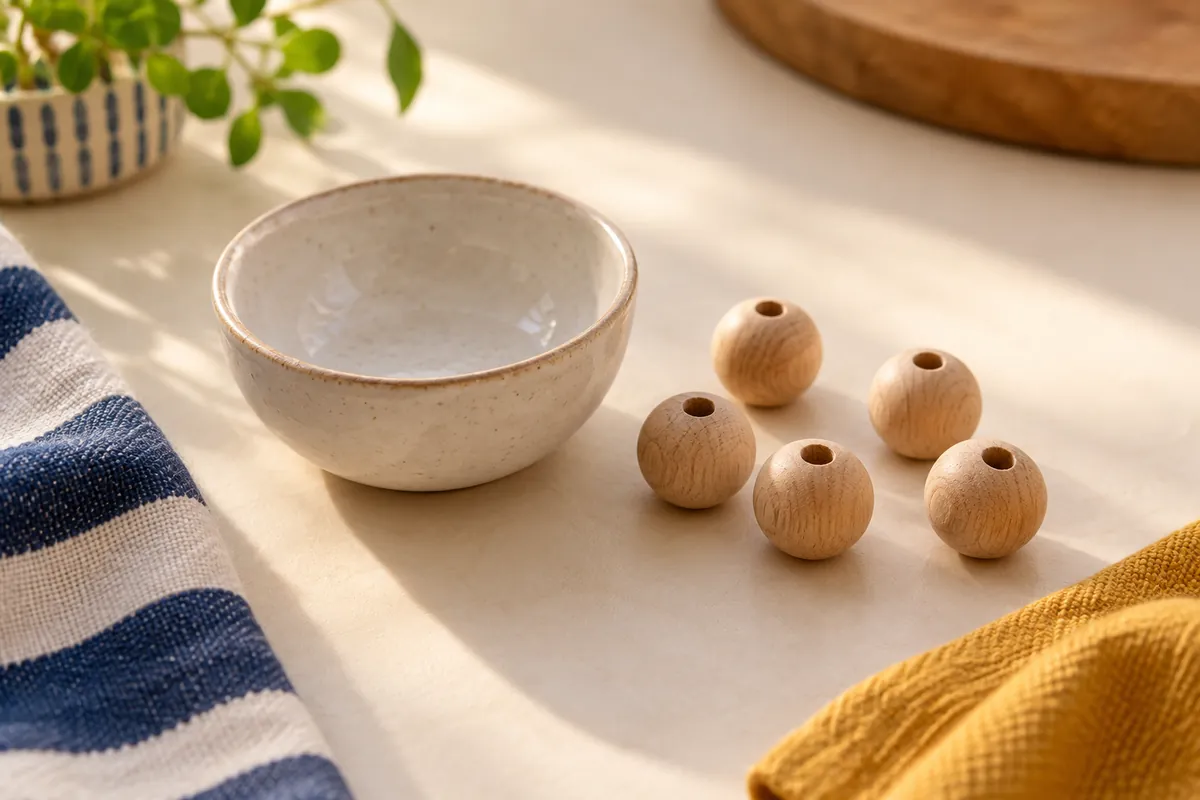
Put a few buttons beside an empty cup. Touch one button and say “one”. Move it into the cup. Touch the next and say “two”. Moving each object helps you keep track: nothing gets counted twice, and nothing gets missed.
The last number you say tells you how many objects you counted. If the last number is five, the cup holds five buttons. The number describes the amount, not the shape, colour or arrangement of the buttons.
Try it yourself
Place five small objects on a table. Move one at a time into a cup, counting each once. When the table is empty, it has zero objects left.
Try arranging five real objects in a line, then in a little circle. Count again. Unless you added or removed something, the amount is still five. Spreading a pile out can make it look bigger without changing its number.
Zero is useful
An empty cup has zero buttons. Zero is not a forgotten answer; it tells us the amount is none. If someone gives you three buttons, you can describe the change as going from zero to three.
Be careful about what you are counting. Two pairs of socks contain four socks. “How many pairs?” and “How many socks?” are different questions. Decide what counts as one object before you begin.
A quick check before moving on
Place six small objects on a table. Slide each into a second pile as you count. Then count back into the first pile. Getting six both times is a useful check that you counted every object once.
Next we will bundle objects into tens. You will still be counting the same things; grouping them simply makes a larger amount easier to read.