
Make a bundle
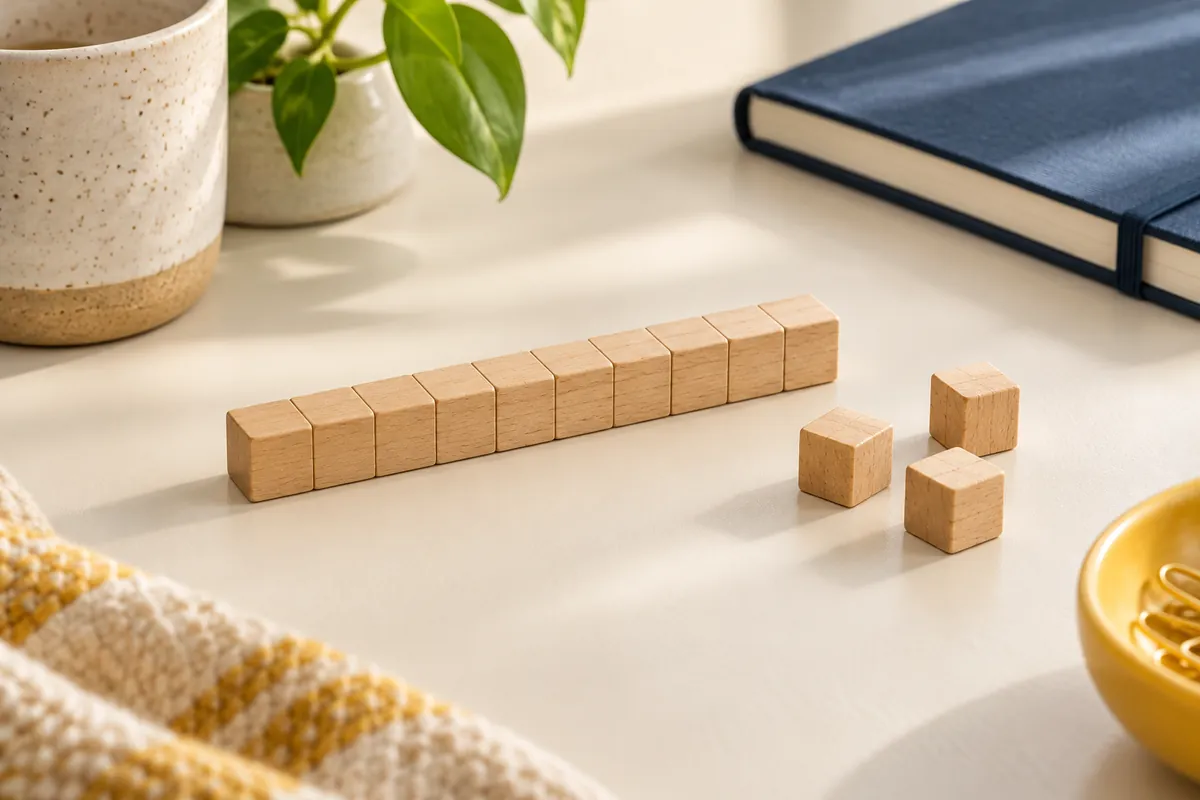
Counting 23 loose objects one at a time works, but it is easy to lose your place. Make a bundle of ten, then another bundle of ten. Three objects remain loose. You now have two tens and three ones.
The bundles have not created new objects. Two bundles contain 20 objects altogether, and the three loose ones bring the total to 23. You can check by unpacking every bundle and counting all the objects.
Try it yourself
Draw 19 little marks. Circle ten to make one bundle, leaving nine loose marks. Add one more: you can now circle a second bundle of ten, making 20 altogether.
Compare 23 with 32. Both numbers use the same two digits, but they mean different amounts: 23 has two tens, while 32 has three tens. The place occupied by each digit matters.
A zero can hold a place
In 30, the three means three tens and the zero means no loose ones. Removing that zero would leave 3, which is only three ones. Zero is doing a useful job even though there are no little cubes to draw.
We call this place value. For these two-digit numbers, the rightmost digit counts ones and the digit immediately to its left counts tens. Larger numbers continue with hundreds and thousands, but two places are enough for now.
Read the amount, not just the digits
For 47, say “four tens and seven ones” before saying “forty-seven”. For 8, there are no complete tens and eight ones. A one-digit number still fits the same idea.
Try making 26 with small objects. Trade one bundle of ten for ten loose objects. The total stays 26. This exchange will become useful when you add or subtract across a ten.
For the full picture, explore seven friendly starting points for basic arithmetic.