
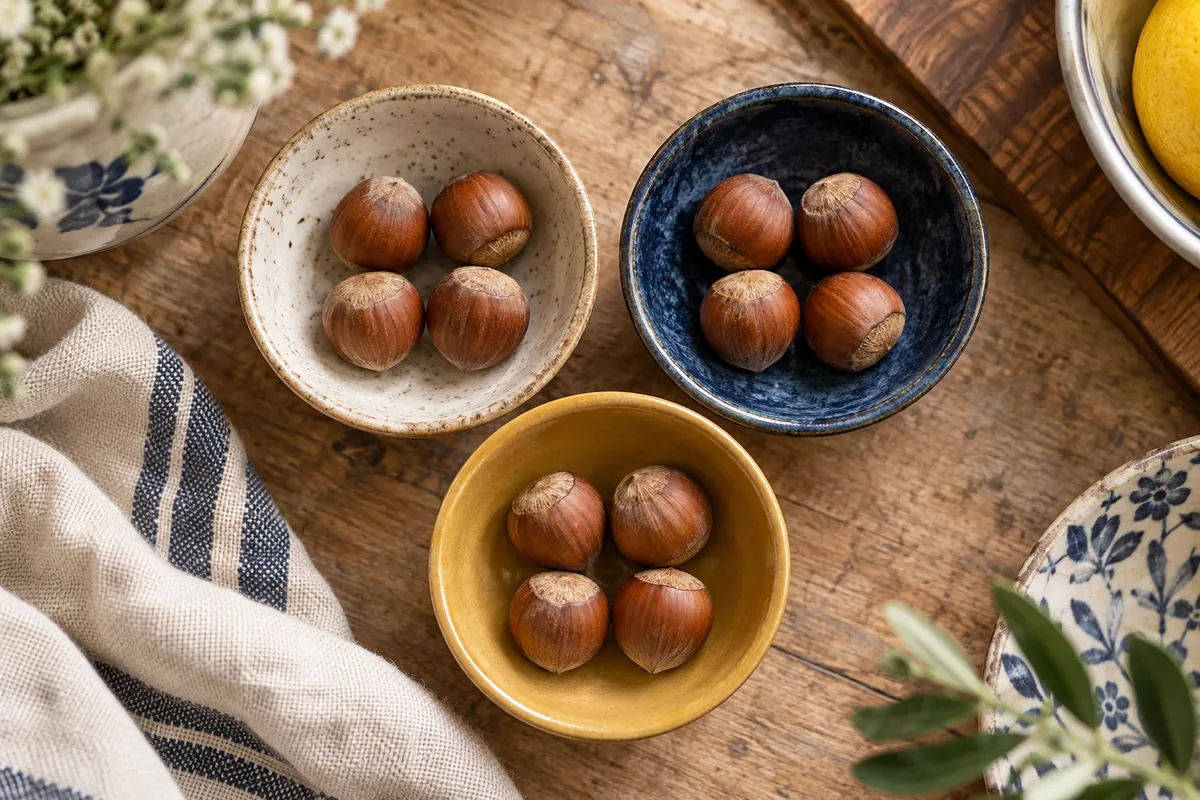
One for you, one for me
You have 12 counters and three bowls. Put one counter in each bowl, then repeat. After four rounds, each bowl contains four counters and the original pile is empty.
That is 12 ÷ 3 = 4: twelve shared equally among three groups gives four in each group. The division sign asks us to split an amount into equal shares in this example.
Try it yourself
Put 13 counters beside three bowls. Give one counter to each bowl, then go round again.
When each bowl has four counters, you have used twelve. One counter is left on the table. You cannot give that whole counter to all three bowls equally.
We call the leftover counter the remainder. Here, 13 ÷ 3 gives 4 each, with a remainder of 1.
Try it with twelve counters instead. This time there is nothing left over.
Count everything to check
Check your sharing by counting everything again.
- There are three bowls with four counters in each. That is twelve counters in the bowls.
- Add the one counter still on the table.
- You have thirteen again: the amount you started with.
Multiplication is a short way to count equal groups, so the check can be written 3 × 4 + 1 = 13.
If three or more counters were left over, you could give each bowl another counter. In this example, a finished remainder must be smaller than three.
What does the answer count?
Division can answer two everyday questions:
- How many does each person get? Share twelve counters among three people. Each person gets four.
- How many groups can I make? Put twelve counters into bags of three. You fill four bags.
Both use 12 ÷ 3 = 4, but the answer means something different: four counters each, or four bags.
Before calculating, say what you are trying to find.
For the full picture, explore seven friendly starting points for basic arithmetic.