
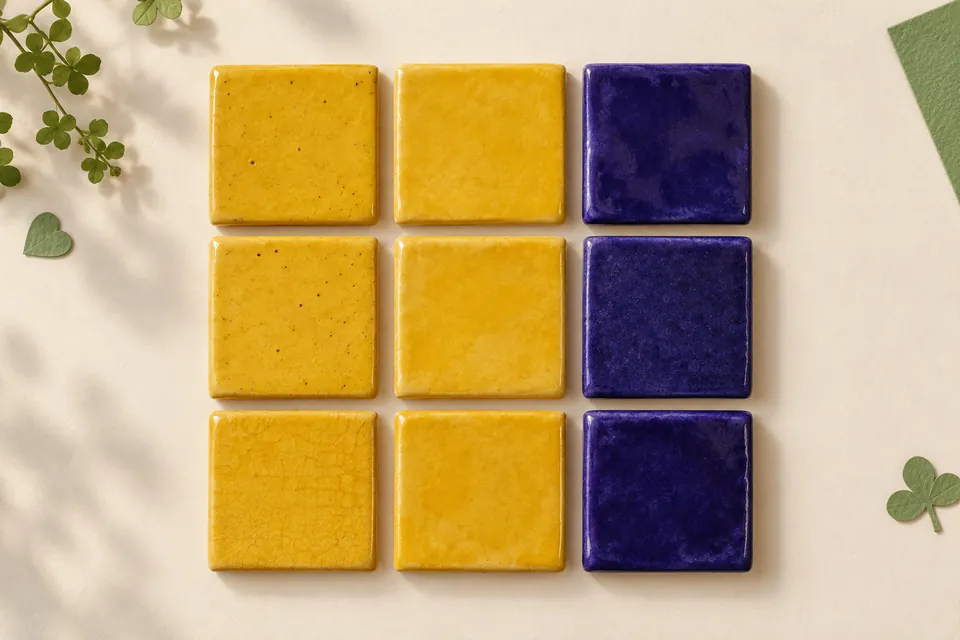
Nine tiles explain the name
A square number is the result of multiplying a whole number by itself. Nine is a square number because 3 × 3 = 9.
Picture nine tiles on the floor. Arrange them in three rows, with three in each row. The shape is a square: its height and width match. Four rows of four tiles give you another square, with 16 tiles.
That is multiplication with equal groups, with one extra condition: the number of rows matches the number in each row.
The little 2 is not telling you to double
5² means “five squared”: 5 × 5 = 25. It does not mean 5 × 2, which is 10. OpenStax explains this exponent notation.
If the small raised 2 feels unfamiliar, write the multiplication out first. You are using two copies of the same number as factors—the numbers being multiplied.
The first positive square numbers are 1, 4, 9, 16, 25, 36. Zero counts too: 0 × 0 = 0, even though there are no tiles to arrange.
The next square needs an odd little border
Start with a three-by-three square. To grow it into four by four, add a new row of four tiles and a column of three beside the old rows. That adds 7 tiles: 9 + 7 = 16.
Look at the jumps between positive squares: 3, 5, 7, 9, 11. Each new border needs the next odd number.
This also explains why 1 + 3 + 5 + 7 = 16. The four borders build a four-by-four square. Cambridge’s NRICH exploration shows this connection with pictures.
Can you grow a square without counting every tile?
A five-by-five square has 25 tiles. How many extra tiles would turn it into six by six?
Check the border
11 extra tiles. Add a row of six and a column of five. The total becomes 25 + 11 = 36, which is 6 × 6.
If a sequence looks mysterious, try drawing what its numbers describe. A little tiled floor can reveal a rule that a list of digits hides.