
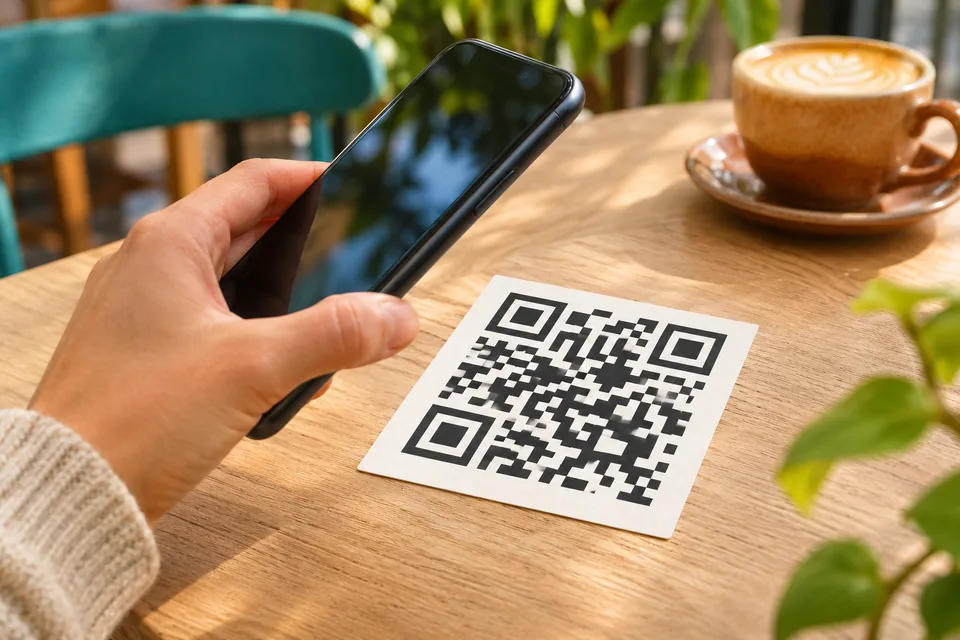
A grid your camera can read
A QR code stores information in a two-dimensional pattern that a scanner can turn back into data, such as a web address. Its three large corner squares help the reader find the code and work out its orientation.
A cafe menu can therefore begin with a small printed square. Your phone reads the pattern; the address it recovers tells it where the menu is.
Why those three squares?
DENSO WAVE describes the three corner markers as the feature that lets a reader recognise the code from different directions. They give the scanner landmarks among all the smaller dark and light pieces.
The data runs across the grid and down it. That gives a QR code two directions to work with, compared with the one-dimensional pattern in a familiar striped supermarket barcode.
A link is a piece of data
The developer’s history explains how phones made website access a common use. The printed pattern carries the address; your browser then uses that address to fetch the page.
Imagine the same menu code printed on a small card and a larger poster. Making the print larger does not, by itself, add more items to the menu. The information encoded in the pattern is what matters.
Why a smudge may still scan
QR codes include error-correction data. DENSO WAVE explains that this extra information can help restore missing or damaged data, with different correction levels available.
There are limits: damage can still make a code unreadable. More error correction also takes up space, so a denser pattern is not simply a badge of importance.
DENSO released the code in 1994. The letters QR stand for quick response, reflecting the aim of reading it quickly. For other small design decisions with a useful job, browse how everyday things work.
Follow the next step in Read the codes around you, or go straight to Morse code’s short and long signals.