
BrainiLab Academy · Everyday inventions
Read the codes around you
Read product and book identifiers, compare QR and Morse, then decode ASCII characters and follow an RFID tag’s radio reply.
Start learning →
What you’ll explore
A printed stripe, a square grid and a short signal can carry information in different ways. Start by asking what the pattern represents.
Follow a retail product identifier, check its last digit and compare it with a QR code. Then follow a pattern arranged in time: international Morse. Optional quizzes check the distinctions without asking you to memorise a full alphabet.
For other small design ideas, browse How everyday things work. If you would like another example of agreed references, Read a world map connects coordinates with distance.
Return to the bookshelf for the book chapter: what does an ISBN identify? Compare the edition, the format and the individual copy.
Continue with ASCII characters and their agreed numbers, then compare printed patterns with an RFID tag’s radio exchange.
One discovery at a time
Your lessons, step by step
- 1
 Read →
2 min read · Quick quiz
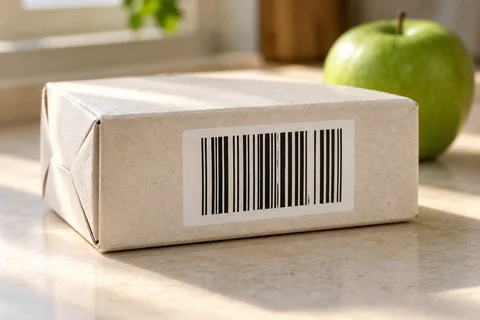
How do barcodes work? The stripes are a shortcut
Distinguish an ordinary retail product identifier from the price retrieved at a till.
Ready when you are - 2
 Read →
2 min read · Quick quiz
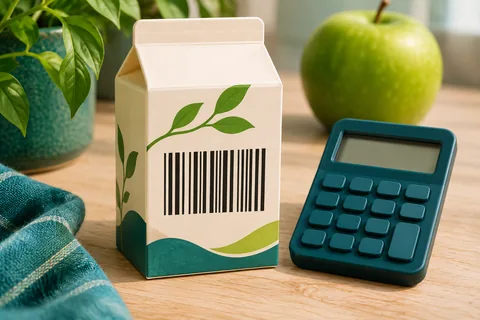
Barcode check digits: why the last number matters
Calculate the check digit in a stated GTIN-13 example and explain the calculation’s limits.
Ready when you are - 3
 Read →
2 min read · Quick quiz
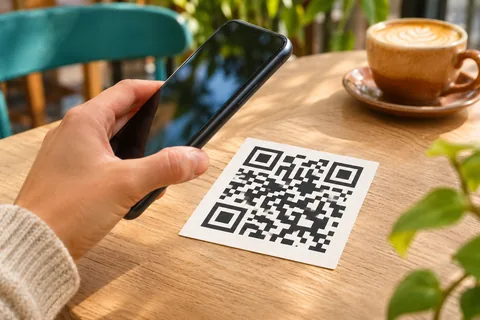
How do QR codes work? Three squares help your camera
Explain how corner markers orient a QR grid and how a web address can be encoded data.
Ready when you are - 4
 Read →
2 min read · Quick quiz
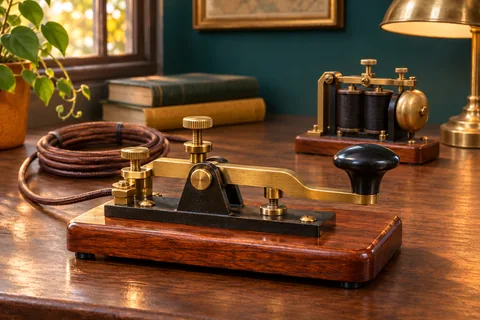
What is Morse code? Listen to the gaps as well
Distinguish signal order and the standard gaps within and between Morse characters.
Ready when you are - 5
 Read →
2 min read · Quick quiz
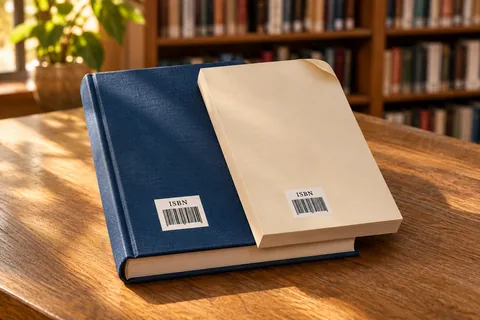
What is an ISBN? The number that identifies a book edition
Distinguish a book edition and format from an individual copy and its barcode.
Ready when you are - 6
 Read →
2 min read · Quick quiz
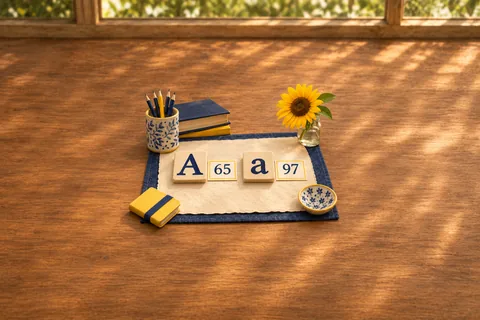
What is ASCII? When 65 means A
Interpret a short ASCII example and distinguish character codes from encryption.
Ready when you are - 7
 Read →
2 min read · Quick quiz
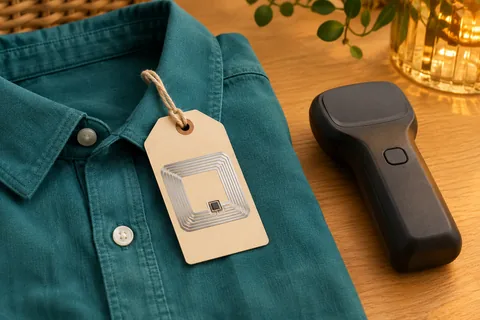
What is RFID? A tag that answers by radio
Explain a passive tag’s energy source and distinguish radio identification from optical scanning.
Ready when you are
A few words worth knowing
- GTIN
- Global Trade Item Number: a product identifier used in retail systems.
- Check digit
- A digit calculated from other digits to check a numerical relationship.
- Morse dot unit
- The duration of a dot, used as the reference for Morse timing.
- ISBN
- International Standard Book Number: an identifier for a particular book edition and format.
- ASCII
- A character-encoding standard whose original seven-bit set has 128 codes.
- RFID
- Radio-frequency identification: communication between a tag and a reader to identify an item.
Curious to dig deeper?
- GS1 — How do GS1 GTINs and barcodes work?
- GS1 — Are the description and price of the item included in the barcode?
- GS1 US — How to calculate a check digit (PDF)
- DENSO WAVE — Two-dimensional data, corner markers and error correction
- DENSO WAVE — QR code development and the meaning of quick response
- DENSO WAVE — Error correction and its limits
- International Telecommunication Union — International Morse code, Annex 1 (PDF)
- International ISBN Agency — What an ISBN identifies and how its digits are arranged
- International ISBN Agency — Assigning ISBNs to editions and formats
- GS1 — ISBN and the EAN-13 barcode
- Harvard CS50 — ASCII character codes and the original seven-bit set (PDF)
- Unicode Consortium — Characters, code points and the ASCII subset
- NIST — Radio-frequency identification and tag power sources
- GS1 US — RFID readers, tags and comparison with barcodes
Follow the sources, explore a little further, or tell us if something needs a correction. Suggest a correction.