
A number for this edition
An ISBN is an International Standard Book Number: an identifier for a particular book title, edition and format from a publisher. It helps bookshops and libraries tell publications apart.
The International ISBN Agency explains what the number identifies. The story’s title alone may leave you choosing between several different products.
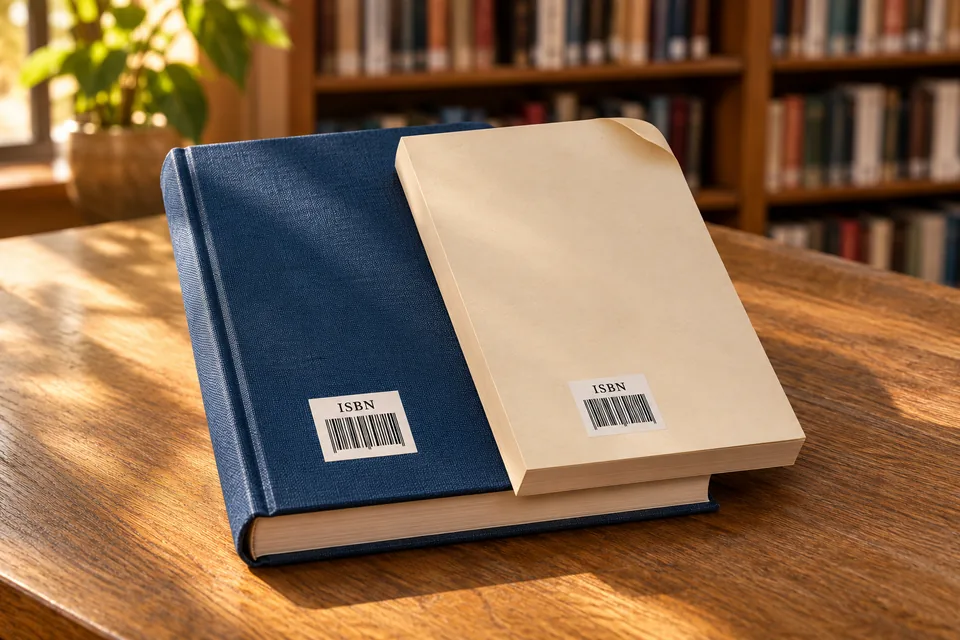
Same story, different format
Imagine a novel sold as a hardback, a paperback and an EPUB ebook. Even if the story is the same, these are different formats and need separate ISBNs. A substantially revised edition needs a new number too, as the agency’s assignment guidance explains.
Here is a small ordering puzzle. A reading group wants the paperback, but a search finds a hardback with the same title. Matching the paperback’s ISBN helps identify the intended format. It does not mean that one individual copy has its own unique number: copies of that same edition can share it.
The number and the bars
ISBNs issued since January 2007 have 13 digits; older books can show the earlier 10-digit form. The modern number has parts for a prefix, registration group, publisher, publication and final check digit. Some parts vary in length, so do not split every ISBN into equal-sized chunks.
The barcode is a way to carry the identifier for a scanner. GS1 describes how ISBNs fit an EAN-13 barcode. The number and the stripe pattern have related jobs: one identifies the publication, the other gives a machine a way to read it.
A check is not a book review
The final digit is calculated from the other digits. Like the check digit in our retail-code example, it checks a numerical relationship. A number passing that calculation does not tell you whether the book is accurate or enjoyable.
To see what happens after a scanner reads an identifier, return to how barcodes work. You can compare numbers, grids and timed signals in Read the codes around you, or choose another object from How everyday things work.