
Unpacking at the mouth
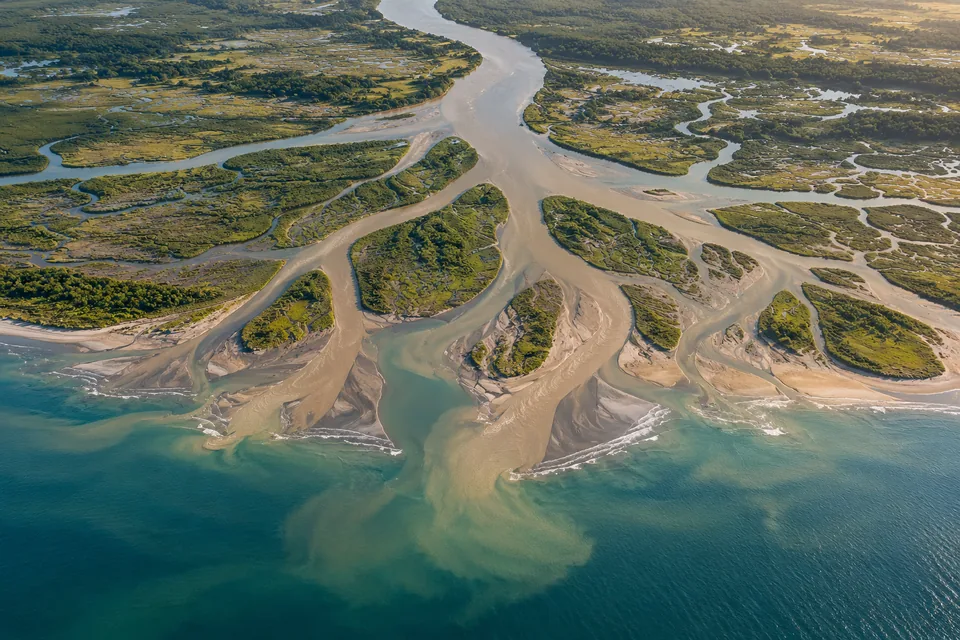
A river delta is a landform built from sediment deposited near a river’s mouth. The river carries sand, silt and other material downstream, then leaves some behind.
Think of it arriving at the coast with a very muddy suitcase.
A delicate balance
A pile of mud alone does not guarantee a growing delta. Sediment must arrive faster than waves and currents remove it, as the National Park Service explains.
That balance helps explain why river mouths can look so different.
Follow the branches
At a delta, the river can split into smaller channels called distributaries. They spread water and sediment across different parts of the delta.
Woods Hole Oceanographic Institution describes how waves and tides reshape these deposits. Some deltas spread like a fan; others have channels that resemble a bird’s foot.
Not always a triangle
The name comes from the triangular Greek capital letter delta, Δ. Real deltas do not all follow that tidy outline.
Compare one with an estuary: the delta describes deposited sediment and land, while an estuary centres on the meeting of river water and the sea.
Explore ten geography terms to picture whenever you fancy another short read.