
Rest between the bursts
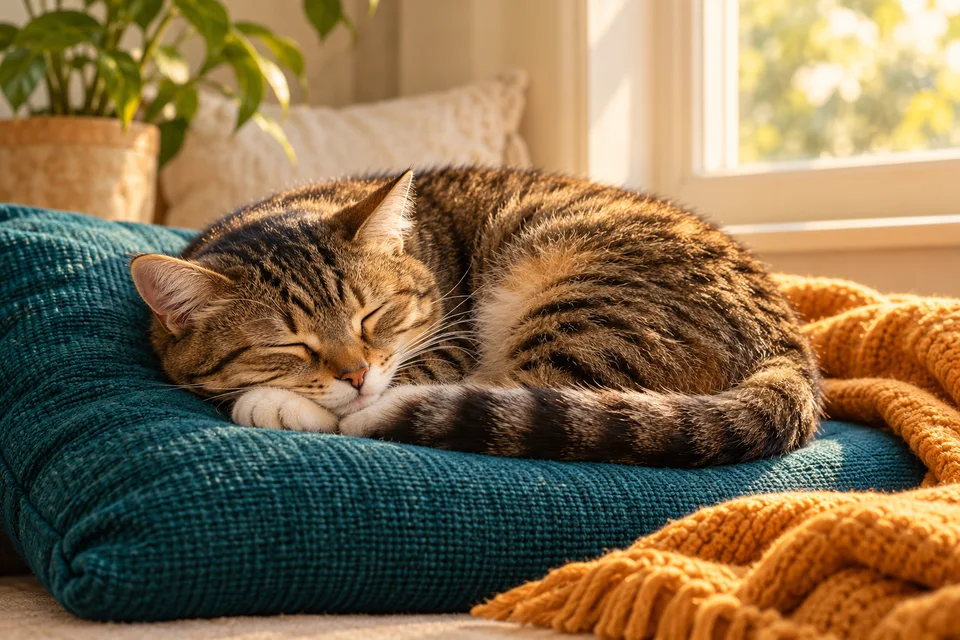
Cats sleep a lot because their natural pattern combines short bursts of activity with long periods of rest. Sleeping helps conserve and restore energy between those active spells.
A house cat may receive dinner in a bowl, yet still switch between a lively game and a long nap. Cats Protection explains this link between rest and activity.
Rest can look surprisingly active to a human observer. Explore how a flamingo supports itself on one leg, and why showing how that stance works does not settle every reason for it.
Many naps across the day
Cats Protection gives an approximate range of 12 to 18 hours of sleep a day for domestic cats. That is not one uninterrupted night’s sleep or a target every cat must meet.
Sleep is spread across shorter periods. Age matters too: kittens and older cats often need more rest than an average adult. Compare an animal with its own usual routine as well as with a broad range.
What is that sleeping paw doing?
Cats move through different sleep stages, including REM sleep, when brain activity increases. Whiskers, ears or paws may move while a cat sleeps.
Those movements do not let us read the cat’s thoughts. Cats Protection’s discussion of dreaming separates observed sleep behaviour from the uncertain question of what a cat experiences. A twitch is not proof of a particular dream.
Notice a change from the usual pattern
Sleeping much more than usual, especially alongside more hiding, is a reason to contact a vet rather than diagnose the cause from an online hour count. Cats Protection recommends checking a marked change.
A comfortable hiding place can also be part of ordinary cat behaviour. Explore why cats use boxes, or follow another familiar habit in why cats knead.