
BrainiLab Academy · Curiosity
Cats: whiskers, paws and purrs
Explore whiskers, kneading, purring, hiding places and sleep. Separate evidence from possible explanations with optional quizzes.
Start learning →
What you’ll explore
A cat can investigate a box, knead a blanket and purr within the same afternoon. Each behaviour raises a different question.
Start with the sensory job of whiskers. Then separate what we know about kneading from possible explanations, and discover why a purr needs context. Read at your own pace; the short quizzes are optional.
Then look at a favourite hiding place: what small shelter studies can, and cannot, tell us about cats and boxes.
Explore how cats spread sleep across their day, and distinguish a broad pattern from a marked change in an individual cat.
One discovery at a time
Your lessons, step by step
- 1
 Read →
2 min read · Quick quiz
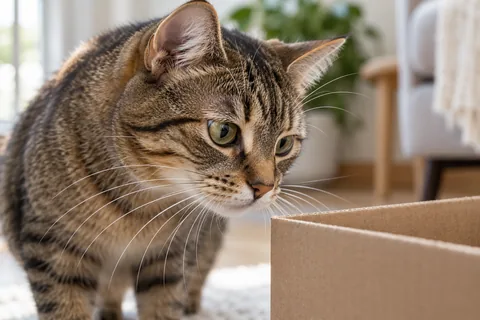
Why do cats have whiskers? A sense of touch beyond the nose
Explain how movement of a whisker sends information from its sensitive base.
Ready when you are - 2
 Read →
2 min read · Quick quiz
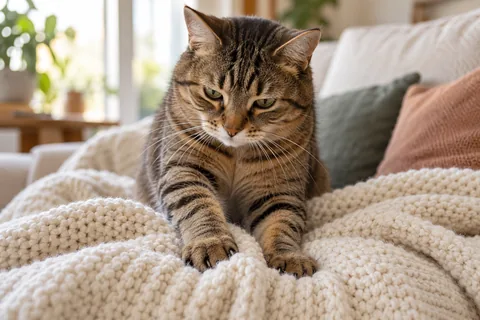
Why do cats knead? Meet the tiny biscuit maker
Distinguish the known kitten behaviour from uncertain explanations for adult kneading.
Ready when you are - 3
 Read →
2 min read · Quick quiz
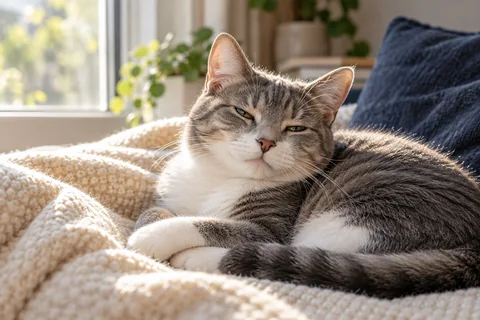
Why do cats purr? A rumble with more than one meaning
Recognise that purring can occur in more than one emotional or physical situation.
Ready when you are - 4
 Read →
2 min read · Quick quiz
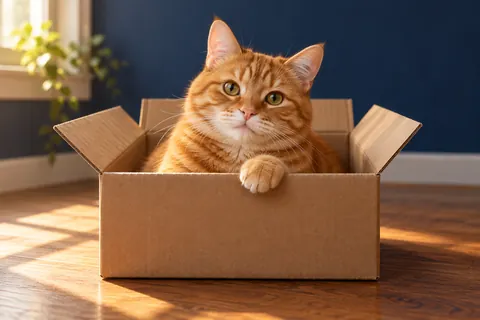
Why do cats love boxes?
Explain what hiding-box trials support and why small shelter studies do not describe every cat.
Ready when you are - 5
 Read →
2 min read · Quick quiz
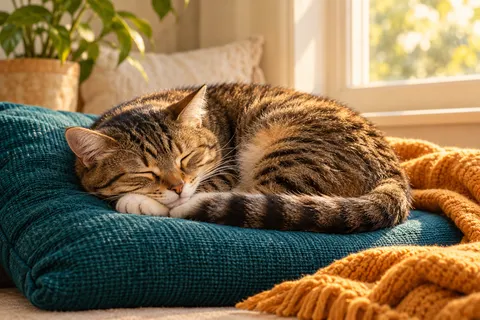
Why do cats sleep so much? Between the bursts of activity
Distinguish a cat’s usual resting rhythm from a sudden change that needs attention.
Ready when you are
A few words worth knowing
- Vibrissae
- The specialised sensory hairs commonly called whiskers.
- Kneading
- Repeatedly pressing the front paws into a surface, one after the other.
- Hiding place
- A concealed space an animal can retreat into.
Curious to dig deeper?
- Cats Protection — Why do cats have whiskers?
- Natural History Museum of Los Angeles County — Cat Anatomy
- Cats Protection — Why do cats knead?
- Cats Protection — Why does my cat purr? Behaviour and context
- Herbst and colleagues (2023) — Domestic cat larynges can produce purring frequencies without neural input (Current Biology, original research, PDF)
- Van der Leij and colleagues (2019) — Hiding boxes and Dutch shelter cats: original randomised trial
- Vinke and colleagues (2014) — Original study abstract, Utrecht University
- Cats Protection — Cats and sleep
- Cats Protection — Feline sleep stages and the limits of dream evidence
Follow the sources, explore a little further, or tell us if something needs a correction. Suggest a correction.